Three batches. Three methods. That’s what it took to confirm that most lemon balm tea recipe instructions online get the steep time wrong.
Fresh leaves, dried leaves, cold brew — I tested all three, and the results weren’t what I expected. Fresh leaves steeped for 8 minutes produced the cleanest, brightest flavor. Dried leaves needed exactly 7 minutes before hitting their bitterness threshold. Cold brew overnight gave the smoothest cup of any method — zero bitterness, clean floral finish, a flavor you can’t replicate with heat.
This lemon balm tea recipe gives you all three methods with the exact ratios I landed on, plus three herb-blending recipes tuned for sleep, anxiety, and digestion — and a troubleshooting section for when things go sideways.
Lemon Balm Tea Recipe
Ingredients
Method
- Place the 10 fresh lemon balm leaves between your palms and press firmly for 3-4 seconds. You will hear a slight crush and smell the citrus oils release. This breaks cell walls and releases rosmarinic acid into the water during steeping. Skipping this step produces significantly weaker tea — it is the single most important technique in this recipe.
- Bring water to a full boil, then remove from heat and let it sit for 30-45 seconds. A rolling boil at 212°F degrades the volatile aromatics that give lemon balm its bright citrus character. If you have a variable-temperature kettle, set it to 195°F directly.
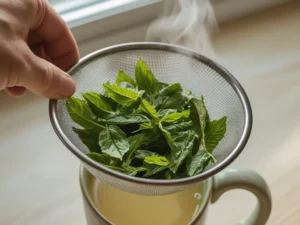
- Add the bruised leaves to a mesh strainer or infuser positioned over your mug. Pour the 195°F water over the leaves and set a timer for exactly 8 minutes. At 5 minutes the flavor is pleasant but underdeveloped. At 8 minutes it is bright, balanced, and clean. At 10+ minutes, chlorophyll breakdown causes noticeable bitterness. The timer is not optional.
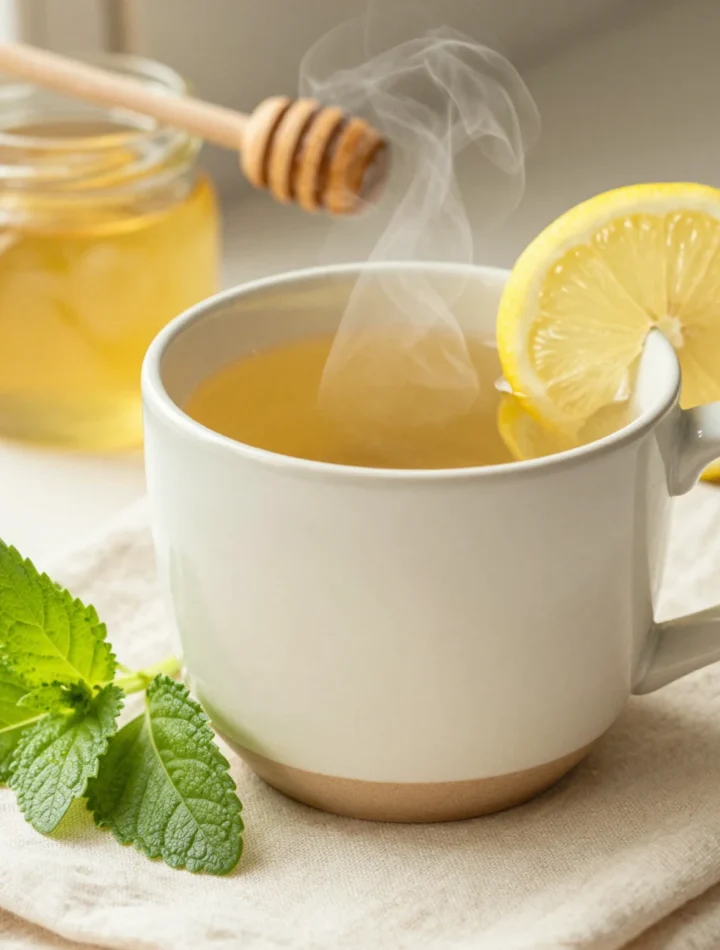
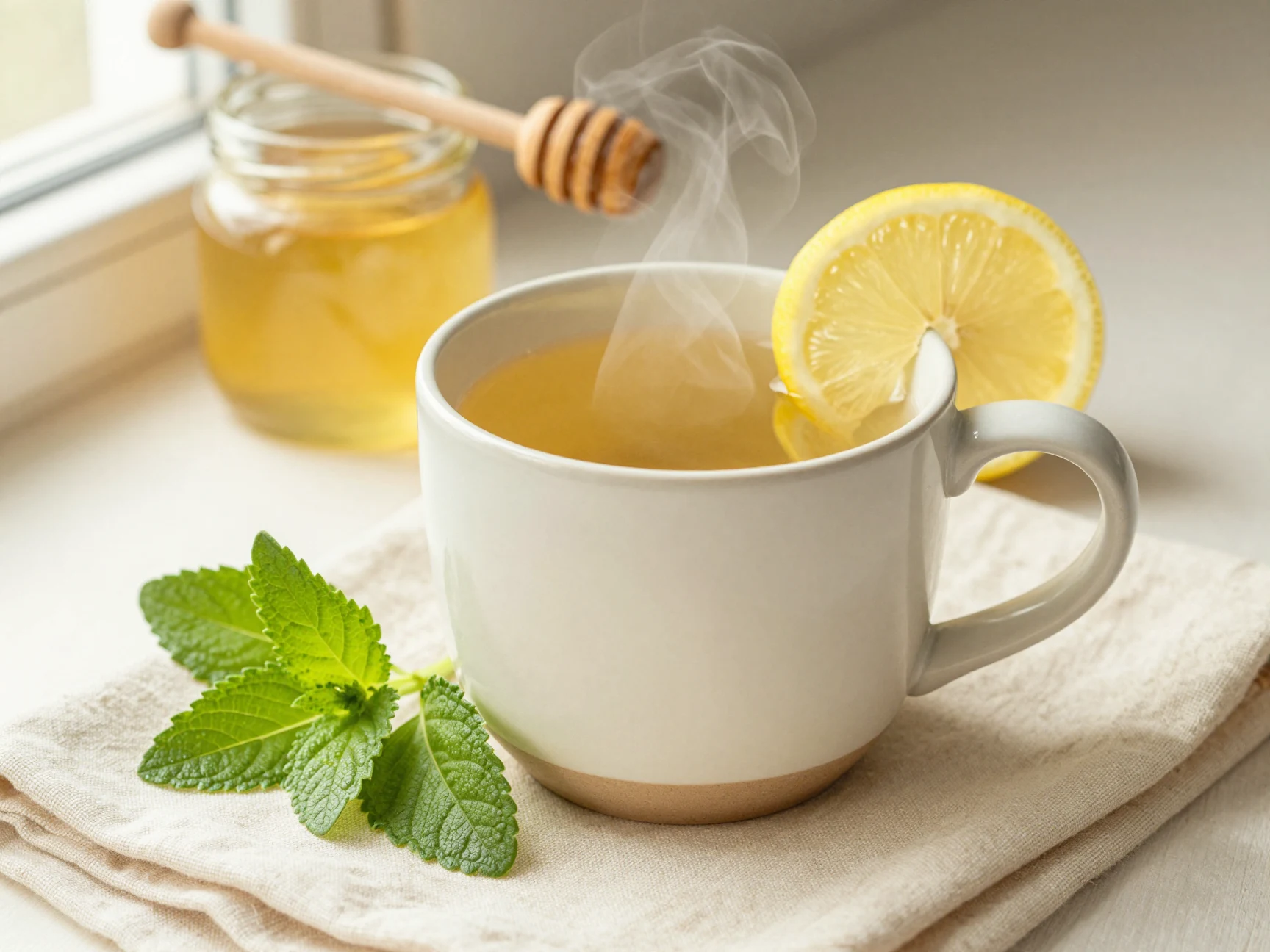
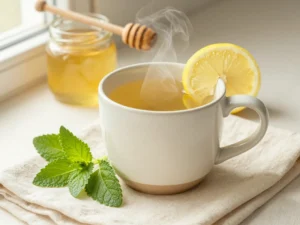
- Remove the strainer at exactly 8 minutes. Add honey and lemon slice if desired. The tea will be pale golden — this is correct. Drink within 10-15 minutes while the volatile aromatics are still present and the citrus note is at its peak. The flavor fades as the tea cools below 120°F.
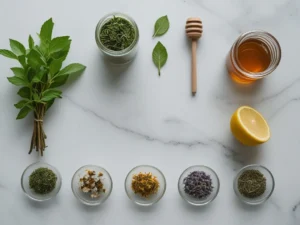
- Add 1 tsp dried chamomile flowers to the strainer alongside 8 fresh lemon balm leaves. Steep 8 minutes at 195°F. Lemon balm and chamomile target GABA receptors through different compounds (rosmarinic acid and apigenin), making the combination more effective than either alone. Drink 30-45 minutes before bed.
- Add exactly ½ tsp dried lavender buds to the strainer with 8 fresh lemon balm leaves. Steep 7 minutes — pull a minute early because lavender over-extracts quickly and produces a soapy flavor at full steep time. Do not use more than ½ tsp lavender — it overpowers the blend. Linalool in lavender has clinical anxiety-reduction evidence.
- Add ½ tsp dried peppermint leaves to the strainer with 8 fresh lemon balm leaves. Steep 8 minutes at 195°F. Drink 20 minutes after a meal, not before — menthol relaxes the lower esophageal sphincter and can worsen reflux if consumed on an empty stomach. Effective for bloating, cramping, or post-meal indigestion.
Notes
What Is Lemon Balm Tea?
Lemon balm (Melissa officinalis) is a member of the mint family with a clean, citrus-herb aroma — softer than lemon tea, less sharp than lemon verbena. The active compound worth knowing is rosmarinic acid, which calms the nervous system by inhibiting the enzyme that breaks down GABA, your brain’s primary relaxant. That’s the mechanism behind a 2,000-year history as a calming herb — not folklore, not placebo.
You can grow lemon balm in almost any climate (it’s nearly invasive in most gardens), buy it fresh at farmers markets, or use dried leaves from any herb supplier. The method varies between fresh and dried, and those differences matter more than most recipes acknowledge.
Health Benefits of Lemon Balm Tea
Here’s what the research actually supports — not the vague “may help” language most sites use:
- Stress and anxiety reduction: A 2024 research review confirmed that lemon balm extract reduces anxiety and improves mood markers in clinical trials. The rosmarinic acid mechanism is well-established — this isn’t anecdotal.
- Sleep quality: Lemon balm has mild sedative properties. Studies show it shortens sleep onset time and reduces nighttime waking when consumed 30-60 minutes before bed.
- Digestive support: The herb relaxes smooth muscle in the GI tract, reducing bloating, cramping, and indigestion — particularly effective when blended with peppermint (see the Digestion Blend below).
- Weight management (indirect): Elevated cortisol drives stress-eating and abdominal fat storage. The same 2024 review found lemon balm reduces cortisol levels. It’s a cortisol regulator, not a fat burner — and that distinction matters if you’re using it with intention. For a morning cortisol-targeting drink, the glucose reset ritual recipe addresses the blood-sugar side of the same equation.
Safety note: Lemon balm tea is generally safe for daily adult consumption. Avoid during pregnancy or nursing. If you take thyroid medication or sedatives, consult your doctor before adding this regularly — lemon balm can potentiate sedative effects and may affect thyroid hormone regulation.
Lemon Balm Tea Recipe — Sara’s Tested Method (Fresh Leaves)
Ingredients
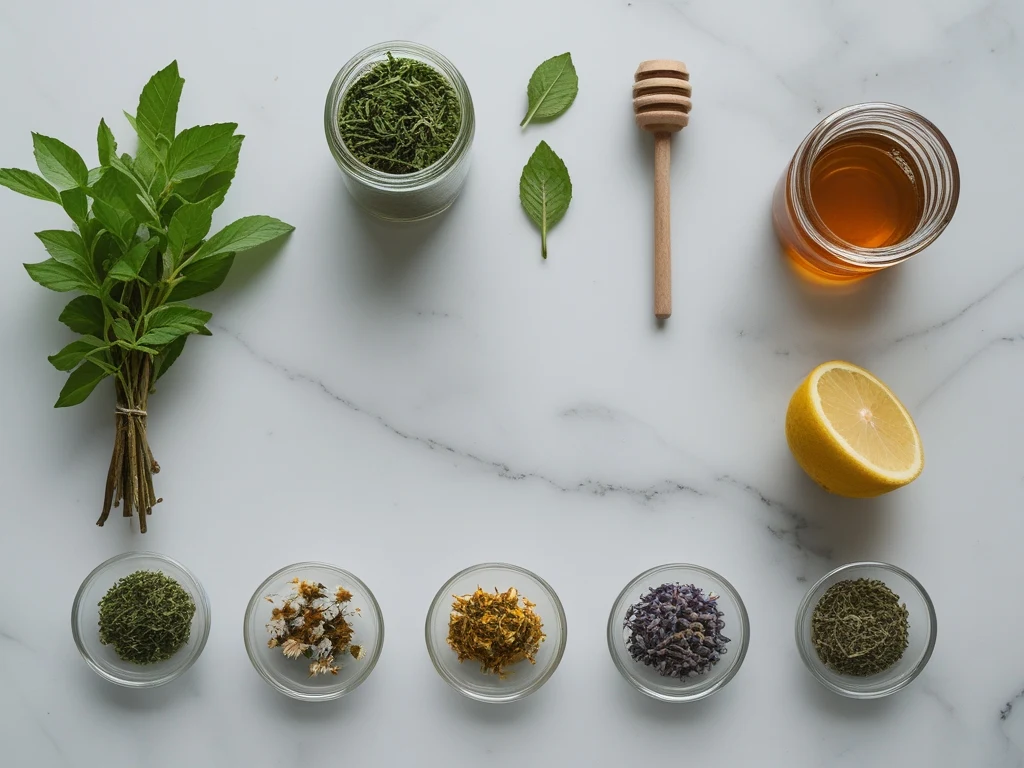
- 10 fresh lemon balm leaves (roughly ¼ cup loosely packed)
- 8 oz (240ml) filtered water, heated to 195°F
- 1 tsp raw honey (optional)
- Lemon slice (optional)
Instructions
- Bruise the leaves. Place the lemon balm leaves between your palms and press firmly — you’ll hear a slight crush and smell the citrus oils release. This breaks cell walls and dramatically increases rosmarinic acid extraction into the water. Don’t skip this step — it’s the difference between weak tea and the real thing.
- Heat water to 195°F. If you don’t have a thermometer, bring water to a full boil then let it sit off heat for 30-45 seconds. Rolling boils (212°F) degrade the volatile aromatics that give lemon balm its bright citrus character.
- Steep for exactly 8 minutes. Add bruised leaves to a mug or strainer, pour water over them, and set a timer. Taste at 5 minutes for a lighter cup. Pull at 8 minutes for full flavor without bitterness. Beyond 10 minutes, chlorophyll breakdown sets in and bitterness becomes noticeable.
- Strain and serve. Remove the leaves, add honey if desired, and drink warm. The pale golden color is expected — lemon balm tea is not a dark brew.
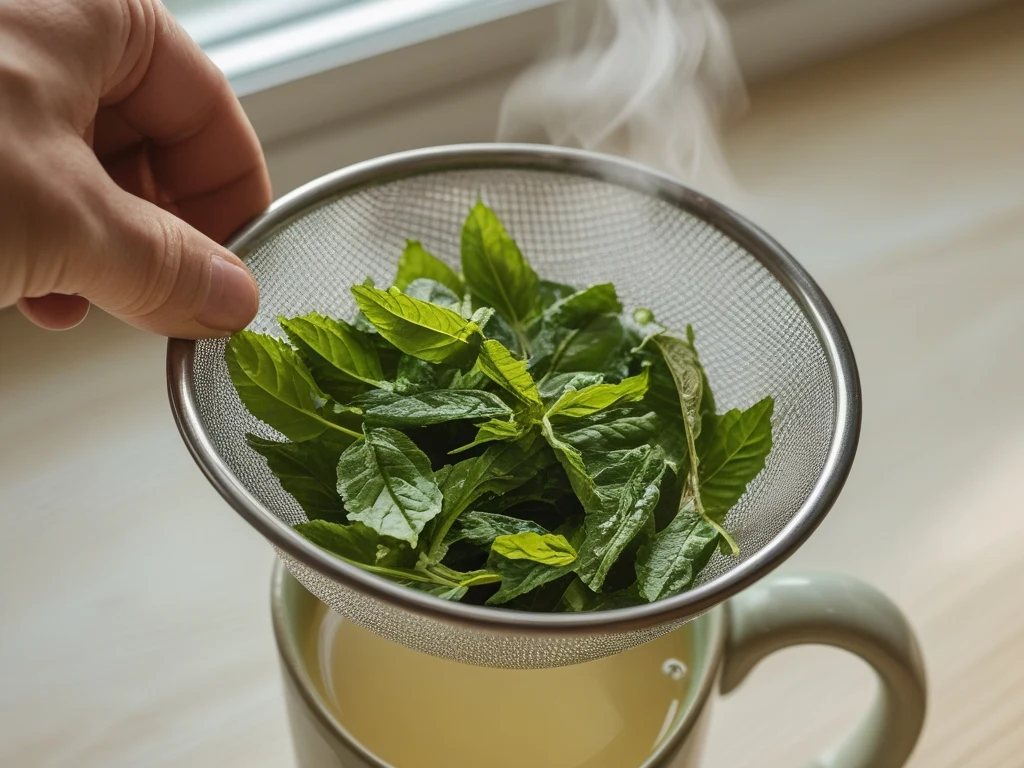
Pro tip: Use a glass teapot or clear mug when you can. Watching the water shift from clear to pale gold tells you extraction is active. When the color stops deepening, the tea has given you most of what it has.
How to Make Lemon Balm Tea with Dried Leaves
Dried lemon balm extracts faster than fresh — moisture removal has already broken down the cellular structure, so the barrier to extraction is lower. Use less time, not more leaves.
- 1 tablespoon dried lemon balm per 8-oz cup
- 195°F water
- Steep: 7 minutes exactly
Crush the dried leaves between your fingers before steeping — same principle as bruising fresh leaves. Pull at 7 minutes. Dried lemon balm hits its bitterness threshold about a minute earlier than fresh, so the timing matters more here than with any other method.
Flavor note: Dried lemon balm has a deeper, warmer, more rounded profile — less of the bright citrus top note, more of the herbal body. Neither is better; they’re different. Use fresh for brightness, dried for depth.
How to Make Iced Lemon Balm Tea
Two methods — and they produce different results and aren’t interchangeable:
Pour-Over-Ice (Quick)
Make a double-strength hot brew: 20 fresh leaves in 8 oz of 195°F water, steep 8 minutes. Pour directly over a full glass of ice. The ice dilutes it to single-strength while chilling instantly. Drink immediately — this method doesn’t store well past an hour.
Cold Brew (Best Flavor)
Add 10 fresh lemon balm leaves (bruised) per cup of cold or room-temperature filtered water. Combine in a sealed jar, refrigerate 8-12 hours. No heat means no chlorophyll extraction — the result is noticeably smoother, never bitter, with a clean floral finish that’s impossible to achieve with a hot steep. Worth the wait when you have time to plan.
3 Herb Blending Recipes
Lemon balm pairs well with other calming herbs, and specific combinations target specific outcomes. These are the three I tested with ratios that hold up:
Sleep Blend — Lemon Balm + Chamomile
- 8 fresh lemon balm leaves, bruised
- 1 tsp dried chamomile flowers
- 195°F water — steep 8 minutes
The science: lemon balm targets GABA via rosmarinic acid; chamomile targets it via apigenin, a flavonoid that binds GABA receptors directly. Combined, they work on the same pathway from two angles. Drink 30-45 minutes before bed.
Anxiety Blend — Lemon Balm + Lavender
- 8 fresh lemon balm leaves, bruised
- ½ tsp dried lavender buds (no more)
- 195°F water — steep 7 minutes
Lavender’s active compound — linalool — has clinical trial support for anxiety reduction. The critical detail is the quantity: ½ tsp maximum. Lavender overpowers fast, and too much makes the tea taste like soap. Pull at 7 minutes to keep the flavor balanced between the two herbs.
Digestion Blend — Lemon Balm + Peppermint
- 8 fresh lemon balm leaves, bruised
- ½ tsp dried peppermint leaves
- 195°F water — steep 8 minutes
Peppermint’s menthol relaxes smooth muscle throughout the GI tract — the same mechanism behind peppermint oil capsules used clinically for IBS. Combined with lemon balm’s own GI-calming properties, this blend works well for bloating, cramping, or post-meal indigestion. Drink 20 minutes after eating, not before — menthol can relax the lower esophageal sphincter and worsen reflux on an empty stomach.
Sara’s Steep-Time Test Results
Every lemon balm tea recipe I found said “steep 5-10 minutes.” That’s an unhelpfully wide range — it spans the difference between underdeveloped and bitter. Here’s what actually happens at each interval with fresh leaves:
| Steep Time | Flavor Profile | Verdict |
|---|---|---|
| 5 minutes | Light, slightly grassy, pleasant but underdeveloped | Too short — flavor doesn’t fully open |
| 8 minutes | Bright citrus-herb, clean finish, balanced | The winner |
| 12 minutes | Noticeably bitter, grassy aftertaste | Over-extracted — chlorophyll breakdown |
For dried leaves the threshold shifts earlier: the winner is 7 minutes. Dried herbs extract faster, so bitterness arrives a full minute sooner than with fresh leaves. Set a timer both ways — don’t eyeball it.
Common Problems and Fixes
- Tea tastes bitter: Over-steeped. Pull fresh leaves at 8 minutes, dried at 7. Set a timer — don’t guess.
- Tea has no flavor: Leaves weren’t bruised, or you used too few. Bruise first, and add 2-3 more leaves if the flavor is consistently weak.
- Grassy or off-flavor: Your dried herbs are old. Dried lemon balm loses potency after 6 months. Check the color — pale green means fresh stock; brown means it’s past its useful life.
- No aroma at all: Water temperature too low. Use 195°F. Tap hot water rarely exceeds 140°F — not enough to extract the aromatics.
- Flavor disappears as it cools: Normal for herbal teas. The volatile aromatics that carry the citrus note dissipate with cooling. Drink within 10-15 minutes of brewing for best flavor.
The Result
Fresh leaves, bruised, 195°F, 8 minutes. That’s the formula after three rounds of testing. The cold brew method is worth the overnight wait when you want the smoothest possible cup. The sleep blend — lemon balm with chamomile — is the one I’ve made on repeat since I first tested it.
If you’re building a daily wellness drink habit, this pairs naturally with the glucose reset ritual recipe in the morning — two bookends to the day that address blood sugar and cortisol respectively. For a tonic approach to the same wellness goals, the horse gelatin tonic covers the collagen and joint recovery angle if you’re combining multiple habits.
Frequently Asked Questions
What is lemon balm tea good for?
Lemon balm tea is used primarily for stress relief, anxiety reduction, sleep improvement, and digestive support. Research supports all four uses — the active compound rosmarinic acid has a well-documented effect on GABA pathways, the same system targeted by many anti-anxiety medications, but through a gentler mechanism. A 2024 clinical review confirmed significant anxiety reduction and improved sleep onset with lemon balm extract.
How long should you steep lemon balm tea?
8 minutes for fresh leaves, 7 minutes for dried. Most lemon balm tea recipes say 5-10 minutes — in testing, that range spans the difference between underdeveloped flavor and bitterness from chlorophyll breakdown. Set a timer. Fresh leaves steeped at exactly 8 minutes produce the cleanest, most balanced cup.
Can you make lemon balm tea with fresh leaves?
Yes — and it produces a brighter, more citrus-forward cup than dried leaves. Use 10 fresh leaves per 8-oz mug (roughly ¼ cup loosely packed), bruise them between your palms first to release rosmarinic acid, and steep at 195°F for 8 minutes. Fresh leaves are the preferred method when you have access to them.
How much lemon balm tea should I drink per day?
1-3 cups daily is the standard range for herbal use. For sleep, one cup 30-45 minutes before bed is the typical protocol. For anxiety, 1-2 cups during high-stress periods. There is no established toxicity threshold at these amounts, but daily consumption beyond 3 cups has not been well-studied long-term. Avoid during pregnancy or nursing.
Does lemon balm tea help with anxiety and sleep?
Research says yes — with appropriate expectations. A 2024 review of clinical trials found significant anxiety reduction and improved sleep onset with lemon balm. The effect is mild compared to pharmaceutical interventions but real and consistent. Lemon balm is most effective as a daily ritual rather than an acute remedy — drink it consistently for 2-3 weeks to notice the cumulative effect on sleep onset and stress response.
Is lemon balm tea good for weight loss?
Indirectly. Lemon balm reduces cortisol — and chronically elevated cortisol drives stress-eating and abdominal fat storage through gluconeogenesis. It’s a cortisol regulator, not a metabolic stimulant or fat burner. If stress-driven eating is part of your pattern, an evening cup of lemon balm tea addresses a real hormonal contributor. Don’t expect it to replace other weight management fundamentals.
What herbs can I mix with lemon balm tea?
Three tested combinations: chamomile for sleep (8 leaves + 1 tsp chamomile, 8 min steep), lavender for anxiety (8 leaves + ½ tsp lavender, 7 min steep — no more than ½ tsp or it tastes soapy), and peppermint for digestion (8 leaves + ½ tsp peppermint, 8 min steep, drink after meals not before). Each combination has a specific physiological mechanism — see the Herb Blending section above for the full rationale.
Can I drink lemon balm tea every day?
Yes, for most adults. It is considered safe for regular daily use at 1-3 cups per day. The calming effects of rosmarinic acid are cumulative, so daily consumption over 2-3 weeks produces more consistent results than occasional use. The exception: avoid during pregnancy or nursing, and check with your doctor if you take thyroid medication or sedatives, as lemon balm can interact with both.