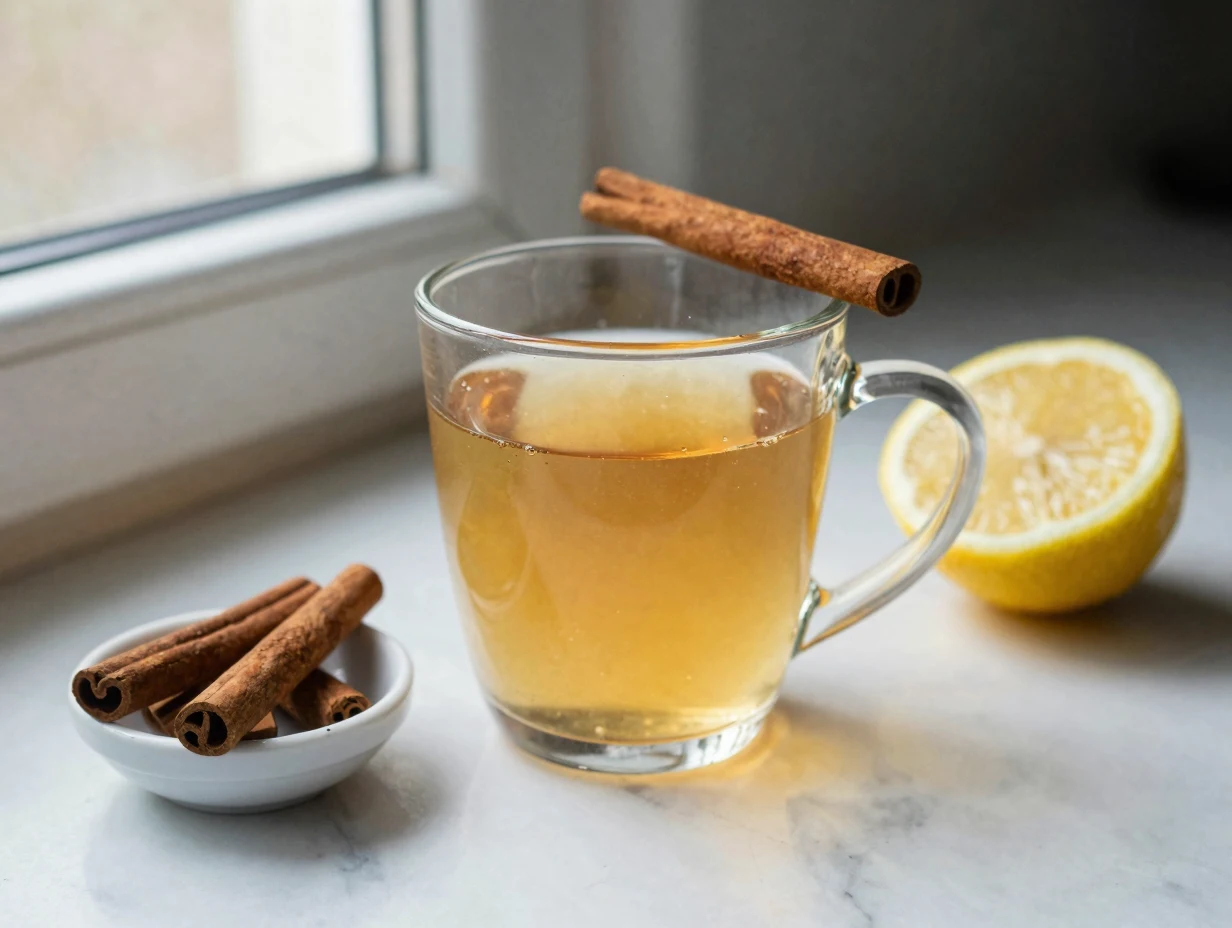
Ingredients
Method
Bloom and Prep
- Pour half a teaspoon of Knox unflavored gelatin into your mug. Add 2 tablespoons of room-temperature water and stir with a fork. Wait exactly 60 seconds — the gelatin will absorb the water and turn slightly gel-like and translucent. This step prevents clumps when the hot liquid is added.
- Heat 8 oz water to 160°F — just below a simmer. Above 180°F degrades cinnamon compounds and makes the gelatin stringy. No thermometer? Let boiling water sit for 2 minutes.
- Pour 1 tablespoon raw apple cider vinegar (with 'the mother') and 1 tablespoon fresh lemon juice into the mug with the bloomed gelatin. Stir once to combine. The lemon balances the vinegar sharpness significantly.
Assemble and Drink
- Sprinkle quarter teaspoon Ceylon cinnamon over the liquid surface. Use Ceylon, not Cassia — Cassia has significantly higher coumarin levels and is not safe for daily use.
- Pour the 160°F water slowly over the gelatin-vinegar mixture. The heat finishes dissolving the bloomed gelatin completely. Do not dump it in fast — slow pour integrates the gelatin without creating foam.

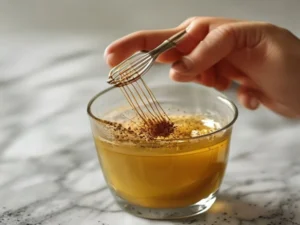
- Use a small whisk or fork. Stir vigorously for 20 seconds until cinnamon distributes evenly throughout the liquid. The drink should look uniformly amber-golden with no cinnamon clumps on the surface.
- Consume within 5 minutes of mixing. Do not let it cool past lukewarm — the gelatin will begin to set slightly at the bottom if the drink drops below 100°F. Drink 15 minutes before breakfast for best appetite and glucose effect.

Notes
Ceylon vs Cassia: Always use Ceylon cinnamon for daily use — Cassia contains higher coumarin levels that can be hard on the liver long-term. Gelatin texture: If you forget to bloom the gelatin first, you will get visible clumps — the blooming step is not optional. ACV tolerance: Start at 1 teaspoon the first 2-3 days if you are new to ACV, then increase to 1 tablespoon once your stomach adjusts. Medication warning: Speak to your doctor before starting if you take metformin, insulin, or diuretics — ACV has documented interactions with all three.