

Cottage cheese cookie dough is one of those recipes I ignored for months because it sounded wrong. Cookie dough is supposed to be butter, brown sugar, flour — not a dairy protein in a tub. Then I made it. Then I made it two more times to fix what went wrong. What you’re getting here is batch three: the version with the right texture, the right sweetness, and a troubleshooting section for every way the first two failed.
This cottage cheese cookie dough recipe is no-bake and takes 15 minutes. The cottage cheese disappears entirely into a smooth, creamy base — you won’t taste it or see it. What you get is something genuinely close to edible cookie dough, with about 18g of protein per serving instead of a stick of butter.
Cottage Cheese Cookie Dough
Ingredients
Method
- Spread oat flour on a microwave-safe plate in an even layer. Microwave on high for 30 seconds, stir, repeat in 30-second intervals until the flour reaches 165°F — typically 60–90 seconds total. Oven alternative: bake at 350°F (175°C) for 5 minutes. Cool completely before using — adding warm flour makes the dough too wet.

- Add the cottage cheese to a blender or food processor. Blend for 10–15 seconds until completely smooth with no visible curds and a glossy surface. Do not over-blend — stop as soon as the curds are gone. Over-blending aerates the mixture and changes the final texture.

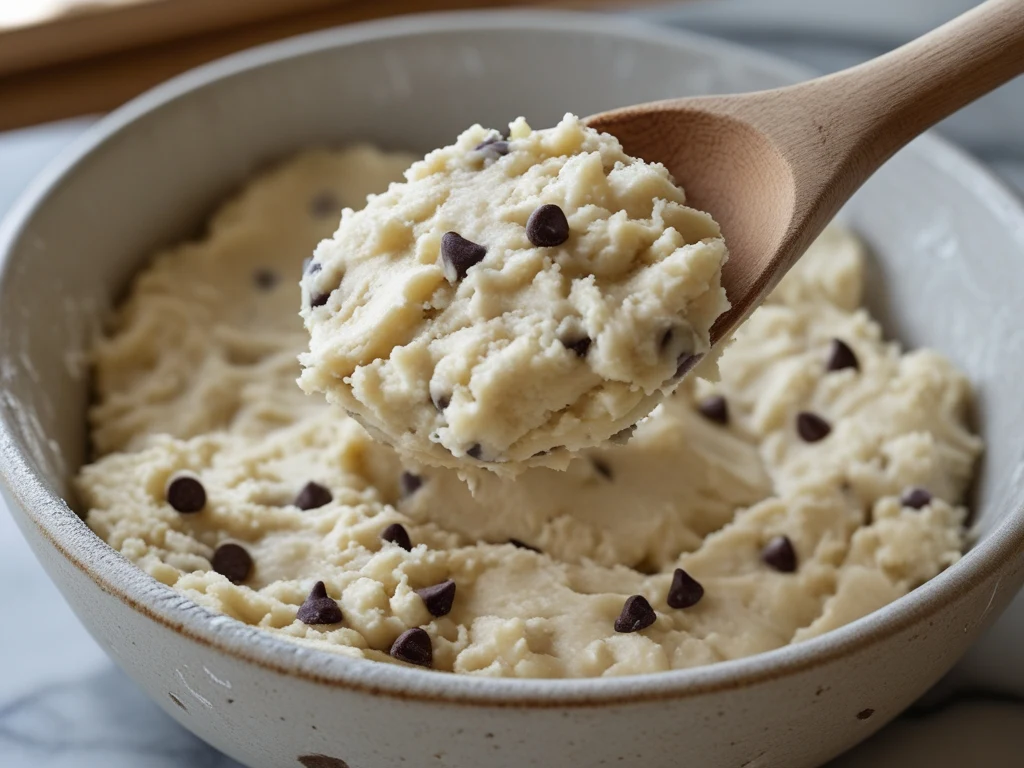
- Transfer the blended cottage cheese to a mixing bowl. Add the cooled oat flour, maple syrup, vanilla extract, and salt. Stir with a spatula until a thick, uniform dough forms that pulls away from the sides of the bowl and holds its shape when scooped.
- Add the chocolate chips and fold gently — 3 to 4 folds is enough. Do not stir aggressively; you want the chips intact and distributed evenly, not melted into the dough.

- Refrigerate for 15–20 minutes for a firmer, more cookie-dough-like texture. The dough is edible immediately if you prefer a softer consistency. Serve with a spoon directly from the bowl, or shape into small balls.
Notes
Is Cottage Cheese Cookie Dough Safe to Eat Raw?
Yes — with one condition. The safety question with edible cookie dough isn’t about the cottage cheese. It’s about the flour. Raw flour can carry E. coli and Salmonella; it’s a genuine food safety risk, not a myth. This recipe uses oat flour, and before it goes in the bowl, you heat-treat it.
Heat-treating takes 90 seconds in the microwave (instructions below). Once the flour hits 165°F, any pathogens are eliminated. After that, you’re working with fully safe ingredients: pasteurized cottage cheese, heat-treated oat flour, maple syrup, vanilla, and chocolate chips. No eggs. No raw all-purpose flour. This cottage cheese cookie dough is safe to eat raw once you’ve treated the flour — and this recipe does that by default.
Why Cottage Cheese Becomes Cookie Dough (The Texture Science)
Here’s what’s actually happening when you blend cottage cheese: the curds break down and the whey proteins emulsify with the fat, creating a smooth, dense cream. At that point, it behaves structurally the way softened butter does in conventional cookie dough — it coats the dry ingredients and holds everything together in a scoopable mass.
Oat flour is the right dry ingredient for two reasons. First, it’s naturally mild — it doesn’t fight the cottage cheese. Second, it absorbs moisture differently than all-purpose flour, producing a denser, chewier texture that reads as “dough” rather than “paste.” The ratio matters: too much oat flour and it turns cakey; too little and it stays wet. The numbers below are the ones that work.
Critical detail: full-fat cottage cheese blends into a genuinely creamy base. Low-fat cottage cheese has less fat to emulsify, so even fully blended it can stay slightly grainy. If you’ve tried this recipe with low-fat and gotten a gritty texture — that’s why. Full-fat is the right call here.
What You Need
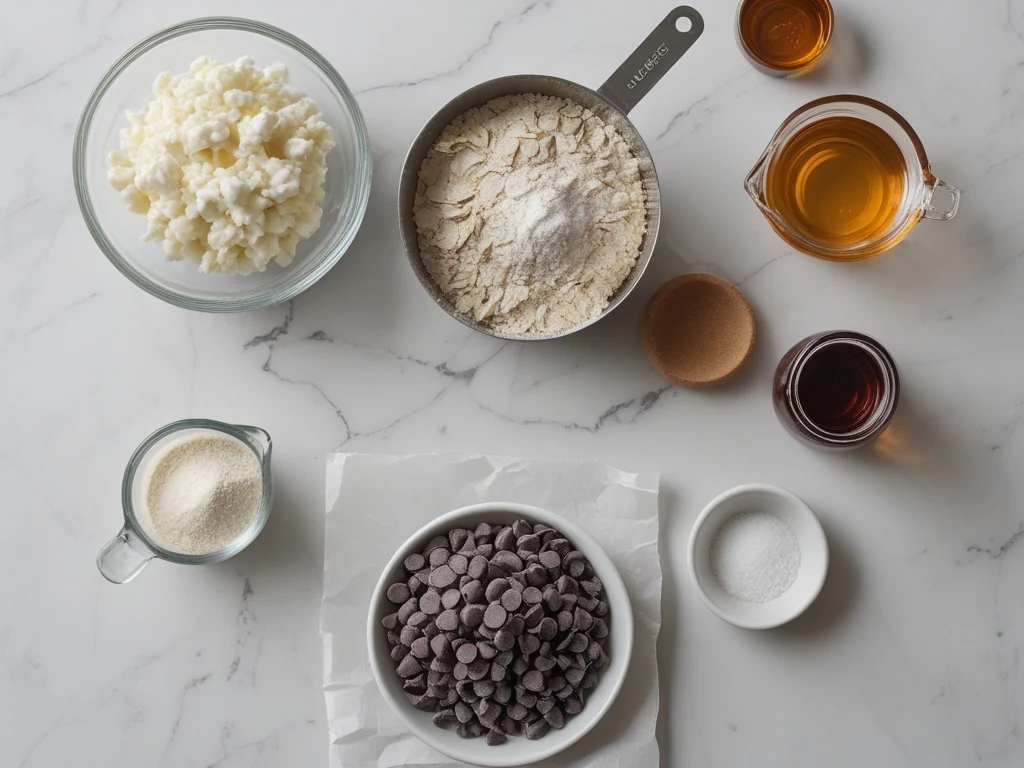
Six ingredients. Nothing unusual.
- 1 cup (226g) full-fat cottage cheese — The base. Full-fat only for the right texture.
- ¾ cup (75g) oat flour, heat-treated — Buy pre-made or blend rolled oats to a fine powder.
- 3 tbsp maple syrup — Adjust to taste. Honey works equally well.
- 1 tsp vanilla extract — Don’t skip this; it does most of the cookie dough flavor work.
- ¼ tsp fine salt — Balances sweetness and suppresses any residual dairy tang.
- ½ cup (85g) mini or regular chocolate chips — Mini chips distribute more evenly.
How to Make Cottage Cheese Cookie Dough
Step 1: Heat-Treat the Oat Flour
Spread the oat flour on a microwave-safe plate in an even layer. Microwave on high for 30 seconds, stir, microwave another 30 seconds, stir again. Repeat until the flour reaches 165°F — typically 60–90 seconds total. Let it cool completely before using. Oven alternative: spread on a baking sheet and bake at 350°F (175°C) for 5 minutes.
Pro tip: Don’t skip the cooling step. Adding warm flour to cold cottage cheese loosens the texture and makes the dough too wet to scoop.
Step 2: Blend the Cottage Cheese
Add the cottage cheese to a blender or food processor. Blend for 10–15 seconds — no longer. You want it smooth and creamy, not aerated. Over-blending introduces too much air and changes the texture. Stop when there are no visible curds and the surface looks glossy.
Step 3: Combine
Transfer the blended cottage cheese to a mixing bowl. Add the cooled oat flour, maple syrup, vanilla extract, and salt. Stir with a spatula until a thick, uniform dough forms. It should pull away from the sides of the bowl and hold its shape when scooped.
Step 4: Fold In the Chocolate Chips
Add the chocolate chips and fold gently — don’t stir aggressively or you’ll melt them into the dough. Three or four folds is enough to distribute evenly.
Step 5: Chill (Optional but Recommended)
The dough is edible immediately, but 15–20 minutes in the refrigerator firms it up significantly. If you want a texture closer to conventional cookie dough rather than a thick mousse, the chill step is worth the wait.
3 Flavor Variations Sara Tested
I made all three of these back-to-back to compare. Here’s what held up.
Classic Chocolate Chip (The Base Recipe)
The base recipe above is the classic. It’s vanilla-forward with real chocolate chip distribution. This is the one to start with.
Peanut Butter Chocolate Chip
Add 2 tablespoons of natural peanut butter and reduce the oat flour to ½ cup + 2 tbsp (not a full ¾ cup). The peanut butter adds fat, which changes how much flour the dough needs to reach the right consistency. I used the full flour amount on the first try and got a dense, dry brick. Reduce the flour, and it’s excellent — richer, more filling, higher protein per serving.
Birthday Cake
Replace the chocolate chips with 3 tablespoons of rainbow sprinkles. Swap maple syrup for 3 tablespoons of powdered sugar (it blends smoother). Add ¼ tsp almond extract alongside the vanilla. The almond extract is the key — it’s what makes birthday cake frosting taste like birthday cake frosting. Without it, this is vanilla dough with sprinkles. With it, it’s convincing.
Troubleshooting: Why Yours Might Not Be Working
I hit every one of these problems across my test batches. Here’s the cause and fix for each.
Problem: Grainy or Gritty Texture
Cause: Low-fat or non-fat cottage cheese doesn’t have enough fat to emulsify fully. Even after blending, the protein solids stay slightly separate. Fix: Switch to full-fat (4–5% milkfat). If you’re committed to low-fat for nutrition reasons, blend for a full 30 seconds and strain through a fine-mesh strainer before adding the dry ingredients.
Problem: Too Wet or Soupy
Cause: Either the cottage cheese had excess liquid in the tub (common in store brands) or the oat flour was added warm. Fix: Drain the cottage cheese in a fine-mesh strainer for 5 minutes before blending. If the dough is already mixed and too wet, add oat flour 1 tablespoon at a time, stirring after each addition.
Problem: Too Thick or Dry
Cause: Too much oat flour, or the oat flour absorbed extra moisture while cooling. Fix: Add maple syrup 1 teaspoon at a time until the consistency loosens to scoopable. Don’t add water — it dilutes the flavor and makes the texture slimy.
Problem: Tastes Too Sour or Tangy
Cause: The dairy tang from cottage cheese isn’t fully masked. Fix: Increase vanilla to 1½ tsp and add an extra pinch of salt. Salt suppresses sourness. If it’s still noticeable, a tablespoon of powdered sugar added to the base rounds out the flavor profile significantly.
How Long Does Cottage Cheese Cookie Dough Last?
Store in an airtight container in the refrigerator for up to 4–5 days. The oat flour continues to absorb moisture over time, so the dough firms up slightly by day two — which many people actually prefer. Stir before serving if it’s been sitting.
Freezing doesn’t work well here. The cottage cheese proteins separate when frozen and thawed, producing a grainy, watery texture. Keep it refrigerated and make a fresh batch each week — it’s 15 minutes.
Frequently Asked Questions
Can you bake cottage cheese cookie dough?
Technically yes, but the results aren’t great. Baked at 350°F for 12 minutes, the cookies spread unevenly, edges dry out before the centers set, and the texture becomes rubbery rather than chewy. This recipe is designed to be eaten as edible dough, not baked. If you want baked cookies with cottage cheese, you need a different recipe with different ratios and added egg.
What does cottage cheese cookie dough actually taste like?
When made correctly — with full-fat cottage cheese, fully blended, and well-chilled — it tastes like slightly lighter edible cookie dough. The vanilla and salt do most of the flavor work; the cottage cheese itself is nearly undetectable. It’s not identical to butter-based dough, but it’s genuinely satisfying. Batch three (this recipe) passed the ‘would I eat this without knowing what’s in it’ test.
Can I use Greek yogurt instead of cottage cheese?
You can, but the texture will be noticeably different. Greek yogurt is more acidic and looser in structure, so the dough will be softer and tangier even after chilling. If substituting, start with ½ cup instead of a full cup and reduce oat flour accordingly. Cottage cheese produces the better texture for this recipe — the fat content and protein structure are closer to what you need for a dough-like consistency.
Is cottage cheese cookie dough actually high protein?
Yes. One cup of full-fat cottage cheese delivers roughly 25g of protein. Divided across four servings, the base recipe comes in at approximately 17–18g of protein per serving — more than a standard protein bar, with better ingredients. Adding peanut butter in the variation brings that up to approximately 22–23g per serving.
The Result
Three batches, two cottage cheese types, and one clear winner: full-fat, 10-second blend, cooled oat flour, chilled for 20 minutes. That’s the formula. The troubleshooting section above covers every failure point I ran into, so your first batch should land right. If you’ve been skeptical about cottage cheese in desserts — this is the recipe that tends to change that.
For more no-bake desserts worth your time, the honey bun cake recipe is another tested favorite. And if you’re building a high-protein snack rotation, the glucose reset ritual recipe pairs well as a morning complement to this evening treat.