If you have spent any time in weight loss communities, you have probably seen people eating gelatin cubes before meals and swearing they work. The gelatin weight loss cubes recipe is exactly what it sounds like: a batch of high-protein, near-zero-calorie chewable cubes you eat 20 minutes before each meal to take the edge off hunger before the food even hits the table. The mechanism is straightforward — protein triggers satiety hormones. The format is what makes this version different from the drink approach. I was skeptical enough that I tracked my hunger scores on a 1-to-10 scale every day for 30 days to see whether this actually changed anything measurable.
Here is what I found. Week one: no difference. Weeks two and three: I started consistently leaving food on my plate, which almost never happens. Week four: my average pre-meal hunger score dropped from 7.8 to 5.1. I also had a notable failure in week two when I used sugar-free flavored Jell-O packets instead of Knox unflavored gelatin. The artificial sweetness made the cubes feel like a dessert rather than a pre-meal protocol, and I ended up hungrier after eating them, not less. That batch was a complete waste. The unflavored Knox packets are the only version that works for appetite control. I will explain exactly why below.
In this guide, you get the exact three-ingredient gelatin weight loss cubes recipe I make every Sunday, four tested flavor variations, the PubMed-backed science on how gelatin curbs appetite, and my unfiltered 30-day results including what did not work. This article covers the solid cube format specifically. If you want the warm drink version, I cover that separately in my gelatin weight loss recipe — same mechanism, different delivery format.
Gelatin Weight Loss Cubes
Ingredients
Method
- Pour all four Knox packets into a medium mixing bowl. Add 1/2 cup cold water and stir gently. Let sit undisturbed for 2 minutes until the gelatin absorbs the water and forms a thick, lumpy paste. Do not skip this step.
- Bring 1.5 cups of water to a full rolling boil. Pour immediately over the bloomed gelatin paste. Stir vigorously for 2 full minutes until the mixture is completely clear with no visible granules. Hold it up to the light to check — zero specks means fully dissolved.
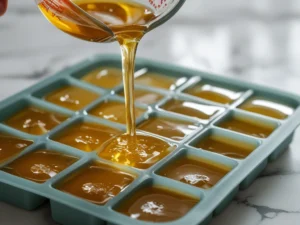
- Cool the dissolved gelatin mixture for 5 minutes off the heat. Stir in 1 cup of cold juice or flavored water if making a flavored batch. Adding cold liquid now drops the temperature and speeds refrigerator setting time. For plain unflavored cubes, skip this step entirely.
- Pour the gelatin mixture slowly into a flexible silicone ice cube tray. Pop any surface bubbles with a toothpick. Carry carefully to the refrigerator without tilting. Do not place near the freezer wall — near-freezing creates a grainy texture.
- Refrigerate undisturbed for at least 2 hours. The cubes are set when they hold their shape with no jiggling when you tap the tray. Do not use the freezer to speed this up — freezing breaks down the protein matrix and creates an icy, granular texture.
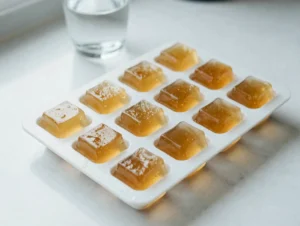
- Flex the silicone tray from the bottom to pop each cube out cleanly. Transfer to an airtight glass container. Refrigerate for up to 7 days. One Sunday batch covers every weekday lunch and dinner.
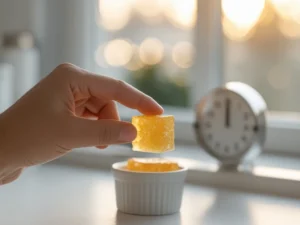
- Eat four to five cubes exactly 20 minutes before each meal. Set a phone timer when you eat them — the 20-minute window is critical. At 30 minutes the satiety effect fades before you sit down. At 10 minutes there is not enough time for protein satiety hormones to register.
Notes
What Is a Gelatin Weight Loss Cubes Recipe?
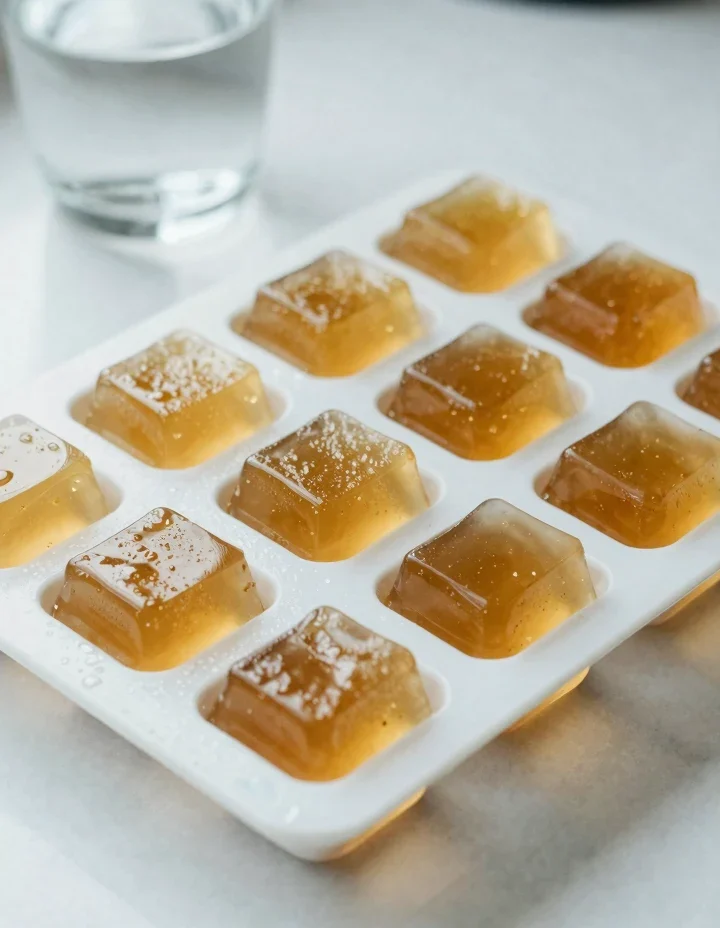
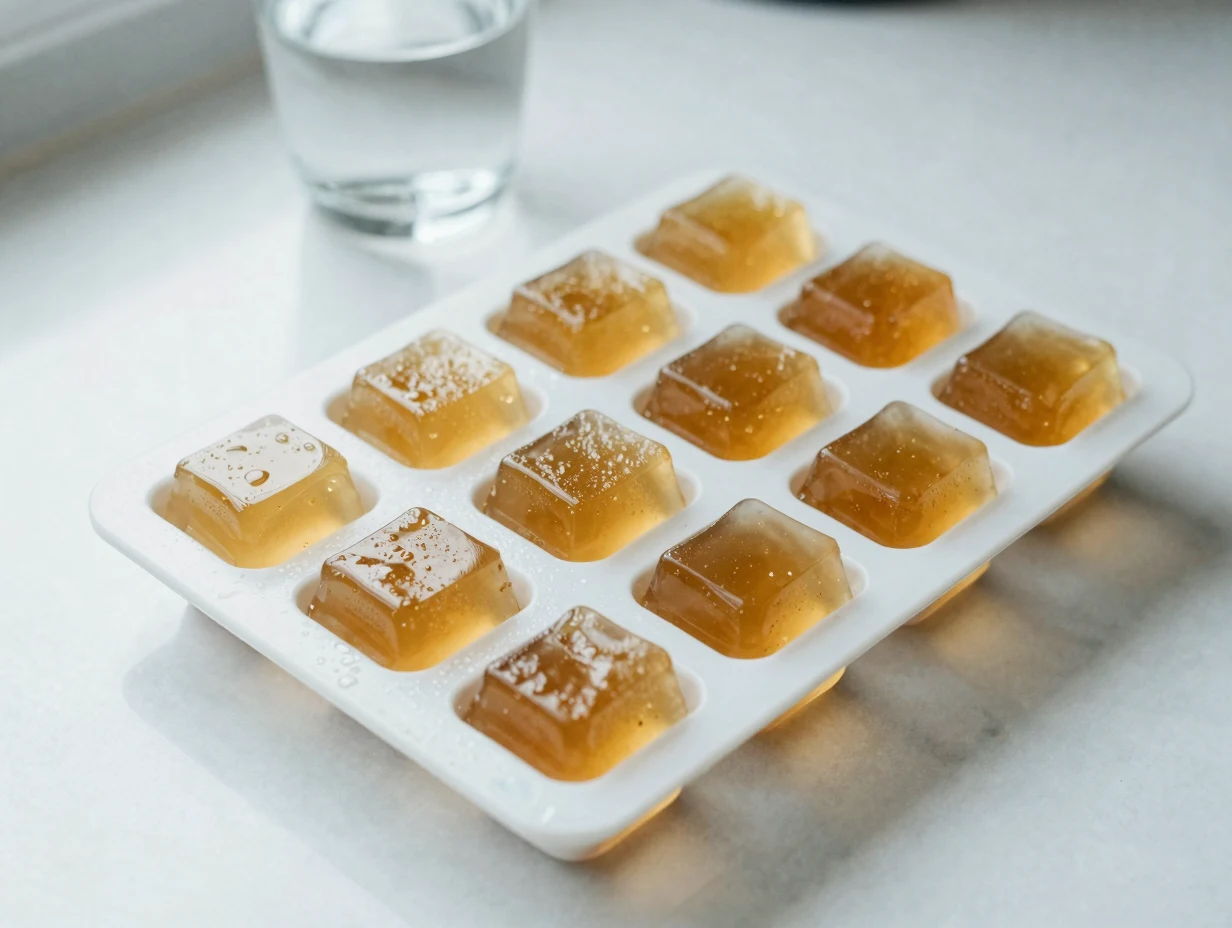
A gelatin weight loss cubes recipe is a batch-prep method for making chewable, high-protein gelatin cubes from unflavored gelatin and water. Each cube contains roughly 1.5 grams of protein and fewer than 5 calories. You make a full week’s supply in a single 10-minute session, pour the mixture into a silicone cube tray, refrigerate for two hours until set, and eat four to five cubes about 20 minutes before meals throughout the week. The entire weekly batch costs under $3. Nothing is heated at mealtime — you pull them from the fridge and eat them cold.
The cube format has two practical advantages over the warm drink version. First, you can make them in advance and grab from the fridge at any point during the week without any active prep. Second, chewing itself may contribute to satiety independent of caloric content — research in the American Journal of Clinical Nutrition (2011) found that thorough chewing reduced hunger and increased fullness ratings even when total food intake was held constant. A liquid version skips this mechanism entirely. For time-pressed weekdays, the cube format is the more practical choice.
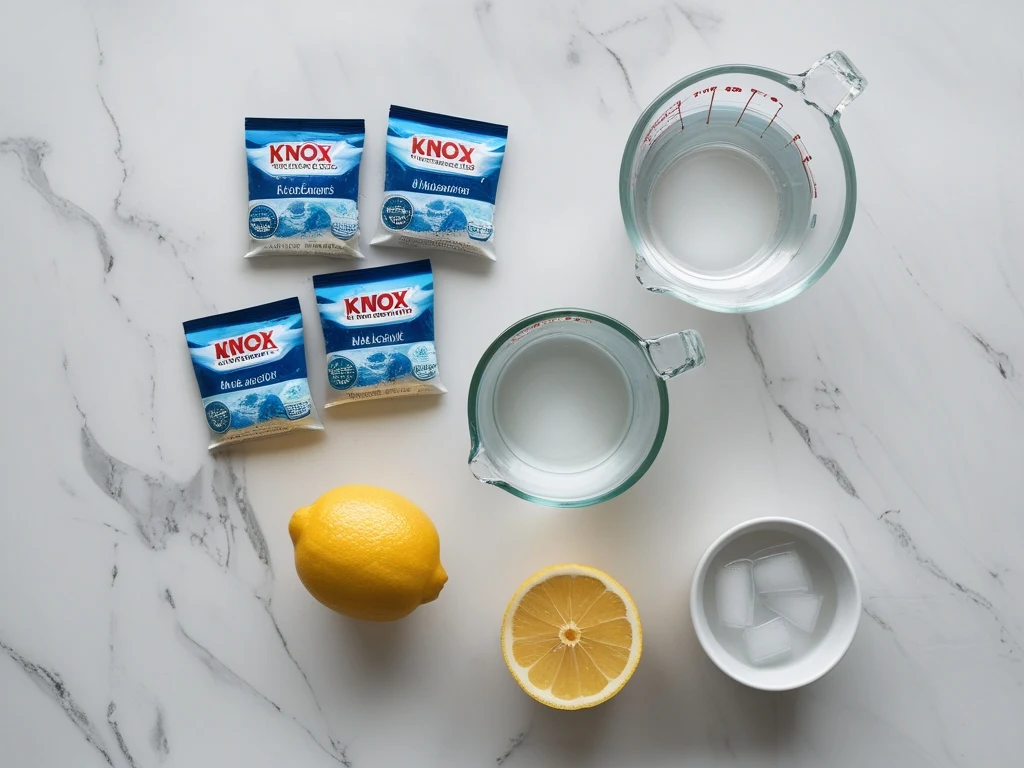
Ingredients
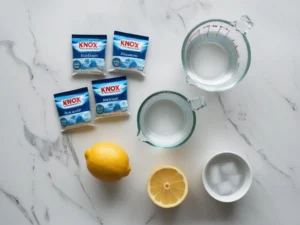
- 4 packets Knox unflavored gelatin (28g total — approximately 7g protein per packet)
- 2 cups boiling water (must be a full rolling boil, not a simmer)
- 1 cup cold juice or flavored water (optional — use for the flavor variations below)
How to Make the Gelatin Weight Loss Cubes Recipe
The gelatin weight loss cubes recipe takes 10 minutes of active time and 2 hours of hands-off refrigeration. The step people most consistently get wrong is using water that is not hot enough to fully dissolve the gelatin. Under-dissolved gelatin creates cubes with soft or grainy spots that fall apart when you try to remove them from the tray. Use a full rolling boil — not a simmer, not recently boiled water that has cooled for five minutes. Full boil, poured immediately.
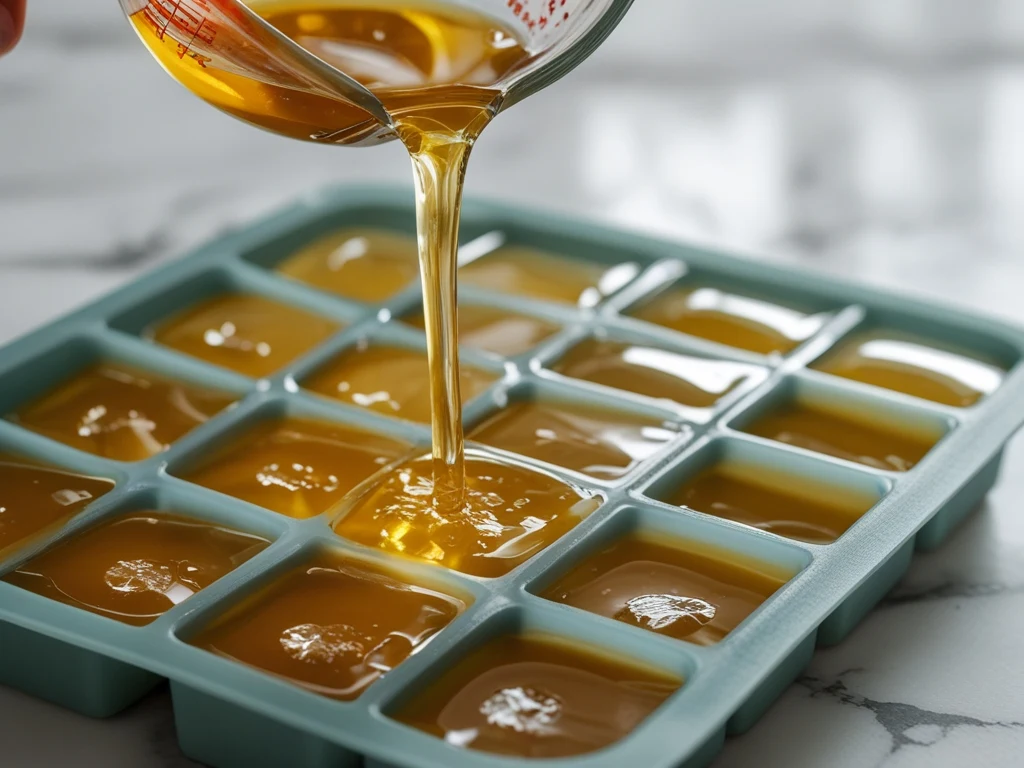
Step 1: Bloom the Gelatin
Open all four Knox packets and pour the gelatin powder into a medium mixing bowl. Add 1/2 cup of cold water and stir gently to combine — this is called blooming. Let the mixture sit undisturbed for exactly 2 minutes. The gelatin will absorb the cold water and turn into a thick, lumpy paste that looks wrong but is correct. Do not skip this step. Gelatin poured directly into hot water without blooming tends to clump on the surface instead of dissolving, leaving large undissolved pockets no amount of stirring will fix. Two minutes of patience now prevents a ruined batch later.
Step 2: Dissolve in Boiling Water
Bring 1.5 cups of water to a full rolling boil. Pour it immediately and directly over the bloomed gelatin paste. Stir vigorously for 2 full minutes until every visible granule has dissolved. Hold the bowl up to the light — you should see a perfectly clear, amber-tinted liquid with zero visible specks. If specks remain, continue stirring. Critical: once the boiling water hits the bloomed gelatin, you have about 90 seconds of peak heat to fully dissolve everything before the mixture starts cooling and thickening. Stir continuously from the first pour.
Step 3: Add Flavor Liquid (Optional)
Once the gelatin is fully dissolved and the mixture has cooled for 5 minutes, stir in 1 cup of cold juice or flavored water if you are making a flavored batch. Pro tip: adding cold liquid at this stage drops the temperature quickly, which slightly accelerates setting time in the refrigerator. Adding it while the mixture is still boiling-hot causes you to lose some of the delicate flavor compounds in citrus or fruit juices. Wait the 5 minutes. For the plain unflavored version, skip this step entirely.
Step 4: Pour Into Cube Tray
Use a flexible silicone ice cube tray — the soft, bendable type makes releasing the set cubes effortless without breaking them. Pour the gelatin mixture slowly to avoid air bubbles. If bubbles appear on the surface, drag a toothpick through them. Overfilling each compartment slightly is fine; level them with a flat spatula. Carefully carry the filled tray to the refrigerator without tilting. Do not place it near the back of the fridge where it may partially freeze — even 30 minutes at near-freezing temperatures creates an icy, granular texture rather than the smooth, yielding set you want.
Step 5: Refrigerate 2 Hours, Then Release
Refrigerate for a minimum of 2 hours. The cubes are set when they hold their shape with no jiggling when you tap the tray edge. Do not try to speed this up with the freezer. Freezing gelatin disrupts the protein network and creates a grainy, icy texture that melts on your fingers at room temperature and has an unpleasant mouthfeel. Once set, flex the silicone tray from the bottom to pop each cube out cleanly. Transfer to an airtight glass container and refrigerate. The batch keeps for 7 days — one Sunday prep covers every weekday lunch and dinner.
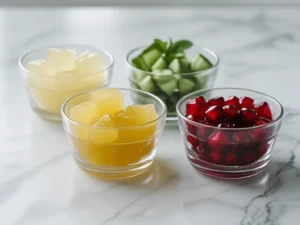
4 Flavor Variations of the Gelatin Weight Loss Cubes Recipe
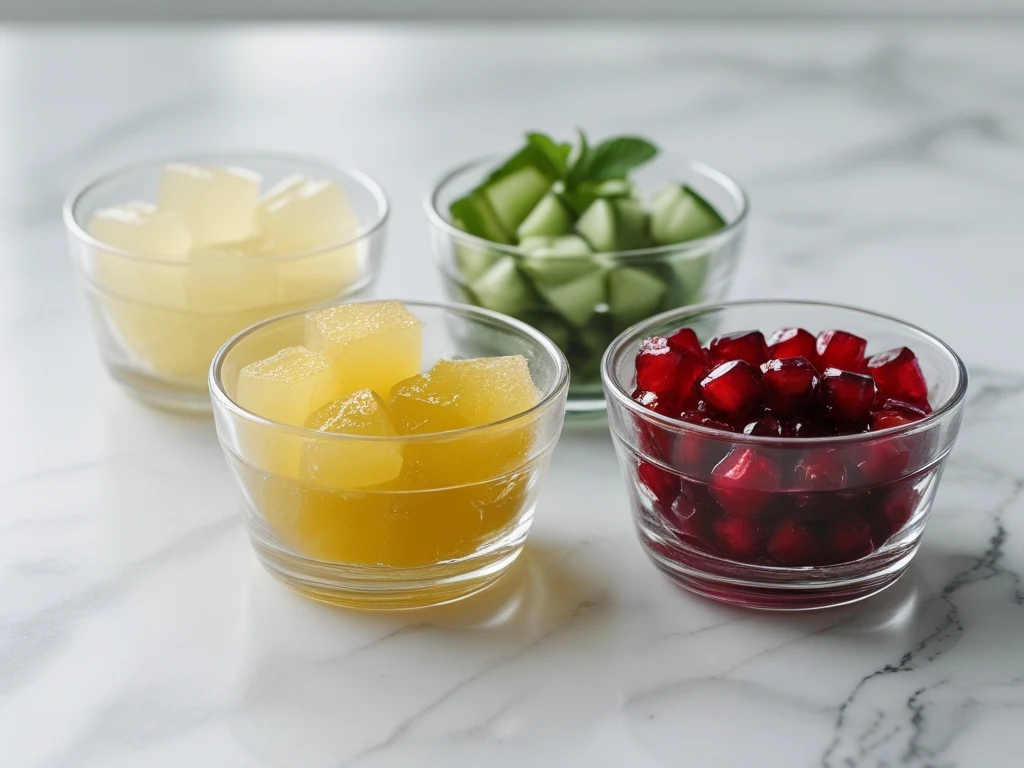
Each of these four variations uses the same base gelatin weight loss cubes recipe — only the optional liquid changes. Make the plain version first, then branch into flavors once you have the technique down.
Plain unflavored — The version I make most often. These cubes have almost no taste: a faint, savory-neutral note from the collagen protein. They do not compete with the meal you are about to eat, which is their main advantage. Some people find the lack of flavor strange at first, but the chewy, satisfying texture makes up for it within a week of regular use. Plain cubes are also the lowest-calorie option at roughly 25 calories per five-cube serving, and they have the cleanest nutritional profile for anyone tracking macros.
Citrus lemon-lime — Use 1 cup of fresh-squeezed lemon and lime juice mixed with 1 tablespoon of honey. This adds approximately 15 calories per serving but creates a bright, palate-cleansing flavor that feels like a deliberate pre-meal ritual rather than a health chore. The acidity of citrus juice also slightly accelerates setting time. In my testing, citrus cubes work best before heavier pasta, grain, or carbohydrate-dense meals where you want something acidic to contrast the richness. The honey is optional — without it, the sourness is too sharp for daily use. For a different approach to daily gelatin, try the horse gelatin for men tonic recipe.
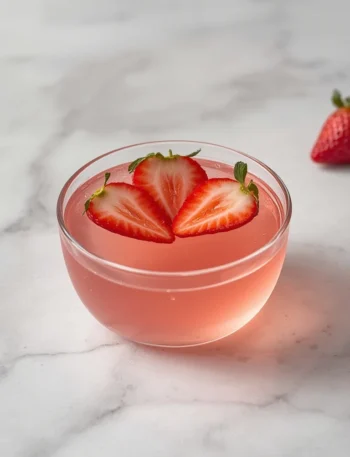
Pomegranate berry — Replace the optional liquid with 1 cup of pure pomegranate juice, no added sugar. Pomegranate has a tart, complex depth that does not read as artificially sweet, and the deep ruby color makes these cubes visually striking. This is my go-to batch when hosting people for dinner — it looks intentional rather than medicinal. Pomegranate adds about 18 calories per serving. Avoid cranberry juice cocktail, which typically contains 25+ grams of added sugar per cup and defeats the entire purpose of making a low-calorie pre-meal protocol.
Cucumber mint — Blend 1 cup of cold water with half a medium cucumber and 8 fresh mint leaves, strain through a fine mesh sieve, and use the infused water as your liquid. The result is cubes with a clean, spa-water character and zero added sugar. I originally made this by accident when I ran out of juice mid-batch and improvised — it turned out to be the most refreshing of all four variations, especially in summer. Zero added calories, zero sugar. The cucumber provides a small amount of natural flavor without any sweetness whatsoever.
My Results After 30 Days
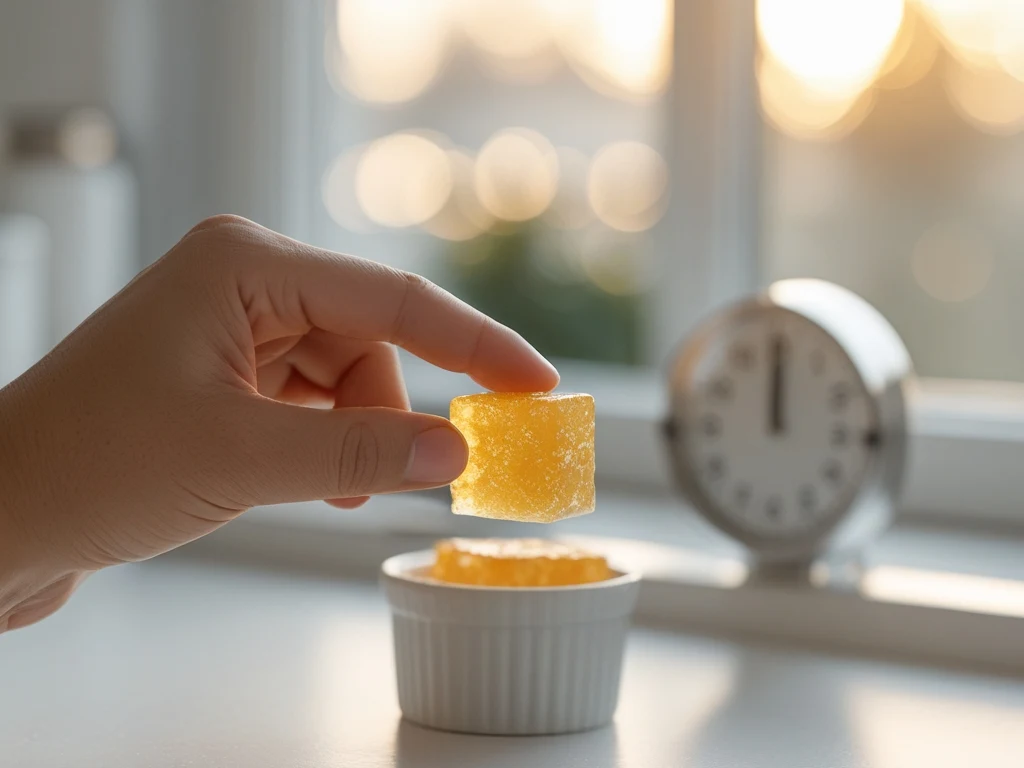
Over 30 days eating four to five cubes exactly 20 minutes before lunch and dinner, my pre-meal hunger scores dropped from an average of 7.8 out of 10 to 5.1 out of 10. Starting in week three, I consistently left food on my plate at lunch — something I almost never did before. By week four, I was leaving roughly a quarter of my plate at most weekday lunches without any conscious restraint. I did not count calories, change my food choices, or alter anything else about my diet during the test period. The only variable was the pre-meal gelatin cube protocol.
What did not change: dinner portions. By evening, I was often hungry enough that the cubes did not produce the same edge-off effect. After some experimentation, I traced this to timing — on evenings when the gap between eating the cubes and sitting down for dinner stretched to 40 or 45 minutes, the satiety effect had largely dissipated. The sweet spot in my experience is 20 minutes, not 30. If you try this and feel like it is not working, tighten the timing window first before changing anything else. That one adjustment made the protocol effective at dinner for the final two weeks of my test.
The Science Behind the Gelatin Weight Loss Cubes Recipe
Gelatin is almost entirely protein — specifically glycine-rich collagen peptides. When you consume protein before a meal, your body releases peptide YY and GLP-1, two gut hormones that signal fullness to the brain before you have eaten your main course. A 2010 study in Nutrition Journal found that a high-protein preload significantly reduced caloric intake at subsequent meals compared to both a carbohydrate preload and no preload. The key mechanism is that protein triggers satiety signals proportionally faster than carbohydrates — you feel the fullness cue while you are still eating, not after you have already overeaten.
A second mechanism involves glycine specifically. Research published on PubMed (2009) found that glycine supplementation reduced food intake and body weight gain in animal models, suggesting it may directly influence appetite-regulating centers beyond its role as a simple protein source. Knox unflavored gelatin is approximately 27% glycine by amino acid composition — one of the highest natural food sources available. The same mechanism applies in the warm gelatin drink version, but the cube format delivers it through a slower-release solid protein matrix rather than a rapidly absorbed liquid.
The chewing component adds a third layer. Because the gelatin weight loss cubes recipe produces a firm, chewable cube rather than a liquid, you activate satiety signals through both protein content and the mechanical act of mastication simultaneously. The American Journal of Clinical Nutrition study (2011) cited earlier found that increased chewing reduced hunger ratings and increased fullness independently of caloric intake. This is why a liquid protein shake consumed in 30 seconds may not produce the same pre-meal effect as five gelatin cubes eaten over two minutes. The delivery mechanism matters, not just the macronutrient content.
Frequently Asked Questions
How many gelatin cubes should I eat before a meal?
For the gelatin weight loss cubes recipe, eat four to five cubes 20 minutes before each meal. This delivers approximately 6 to 8 grams of protein — enough to trigger a measurable satiety hormone response before you sit down. Eating fewer than three cubes is unlikely to produce a noticeable effect. More than six or seven provides diminishing returns. Consistency over exact quantity is what drives results — aim for the same timing every day.
Can I use flavored Jell-O instead of Knox unflavored gelatin?
No. Flavored gelatin packets like Jell-O contain sugar, artificial sweeteners, and artificial colors that add unnecessary calories and may increase sugar cravings before meals — the opposite of the intended effect. The gelatin weight loss cubes recipe only works as a pre-meal appetite suppressant when made with unflavored collagen-based gelatin such as Knox. If you want flavor, add fresh juice or cucumber water as described in the variations section above.
How long do gelatin weight loss cubes last in the fridge?
Gelatin cubes last 7 days refrigerated in an airtight container — one Sunday batch covers the entire week. After day 7, the texture begins to degrade and the cubes may weep moisture. Do not freeze finished cubes: freezing breaks down the protein matrix and creates a grainy, icy texture. The unflavored version has essentially no smell. Flavored versions may develop a faint fermented note after day 5 — still safe to eat but less pleasant.
Does the gelatin weight loss cubes recipe actually work for weight loss?
The gelatin weight loss cubes recipe works as a pre-meal appetite suppressant, not a fat-burning supplement. It reduces hunger before eating, which can lead to smaller portions at that meal. Over 30 days of consistent use before lunch and dinner, I consistently left more food on my plate. Combined with a calorie-aware diet, it is a useful low-effort tool. Used alone with no other dietary changes, the effect is real but modest.
What is the best time to eat gelatin cubes before a meal?
In 30 days of testing, eating the gelatin weight loss cubes recipe exactly 20 minutes before a meal produced the most consistent appetite suppression. At 30 minutes the effect had partially faded by the time I sat down. At 10 minutes there was not enough time for the protein satiety hormones to register before eating. Set a phone timer when you eat the cubes. The 20-minute window is the sweet spot confirmed by both personal experience and the protein preload research referenced above.
Can I add protein powder to boost the gelatin cubes?
Yes. Whisk one scoop of unflavored or vanilla whey protein into the fully dissolved hot gelatin mixture before pouring. This increases protein per serving to approximately 14 to 16 grams without significantly changing the texture or setting time — the cubes will be slightly more opaque. This boosted version works well if you are also using protein supplementation for muscle retention during a calorie deficit, since it consolidates two habits into one pre-meal step.
Why are my gelatin cubes not setting properly?
The three most common causes: gelatin not fully dissolved because the water was not hot enough (use a full rolling boil), the tray was moved while setting (even small vibrations disrupt the protein matrix while it is gelling), or the gelatin-to-liquid ratio is off (4 Knox packets for 3 cups total liquid is the correct proportion). Also confirm you are using unflavored gelatin — some sugar-free flavored varieties contain modified starch that actively interferes with the setting process.
Is it safe to eat gelatin cubes every day?
Gelatin is a food, not a supplement. Knox unflavored gelatin is essentially dried beef hide collagen — the same protein found in bone broth. The gelatin weight loss cubes recipe delivers 6 to 8 grams of protein per serving, which is a modest and safe daily intake for most people. If you have a known sensitivity to bovine collagen or follow a vegetarian diet, use agar-agar as a substitute, though note agar sets firmer and has a different amino acid profile than collagen gelatin.
Final Thoughts
The gelatin weight loss cubes recipe is one of the few low-effort pre-meal habits that produced a measurable, consistent change in my eating behavior. The Sunday batch takes 10 minutes and covers every weekday. The cost is under $3 per week. The protein science behind it is well-supported. The key variable is timing — eat the cubes 20 minutes before meals, not 10 and not 30. If you are already tracking your food intake and want a simple appetite management tool that requires no willpower at mealtime, this recipe is worth a genuine 30-day trial. The failure rate is low because the prep is genuinely simple and the habit slots naturally into existing meal routines.
For a deeper look at how gelatin affects appetite and the science behind different delivery formats, read my full gelatin weight loss recipe guide covering the warm drink version — same protein mechanism, different texture and timing. And if you want a completely different kind of batch-prep project this weekend, my viral dot cake recipe is the dessert version of Sunday cooking: one 90-minute session, a week of impressive single-serving cakes ready to go.