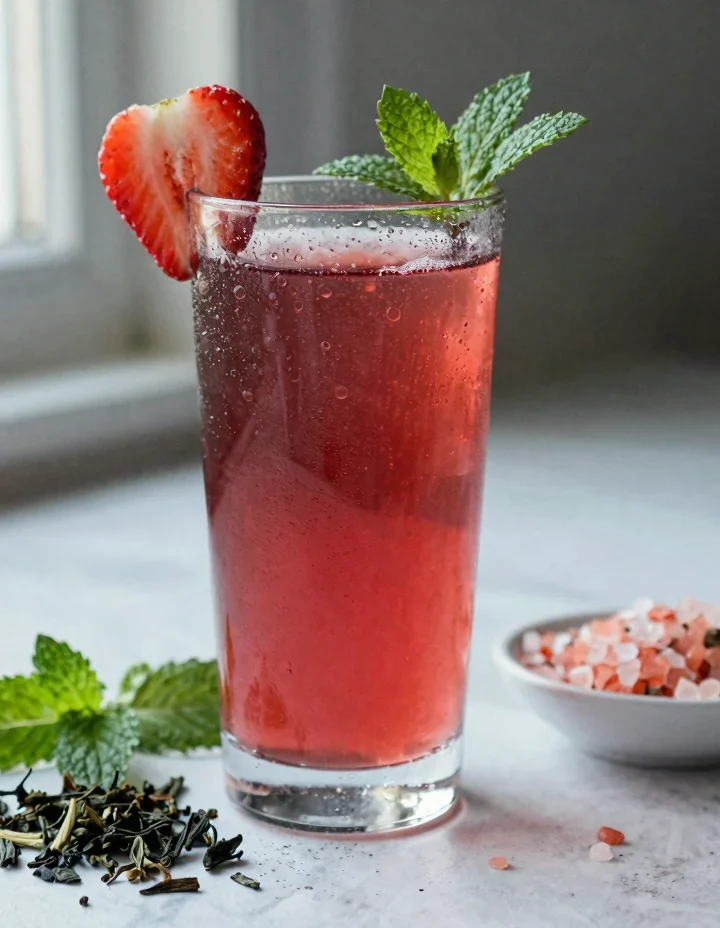
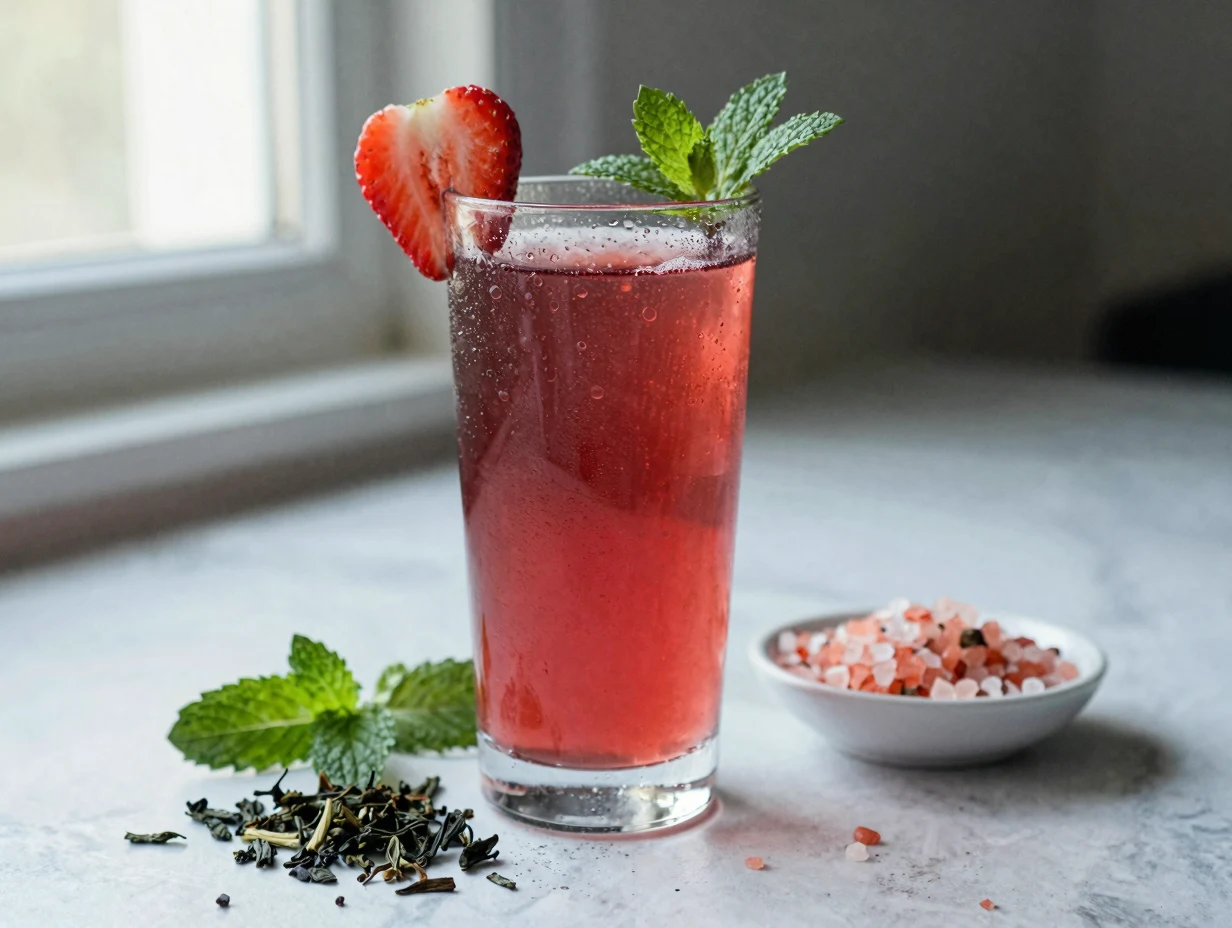
I stopped buying Gatorade the day I made this strawberry green tea electrolyte drink recipe for the first time. That was two weeks ago. I haven’t looked back.
Here’s the situation that led me here: I’d been running three mornings a week for a month, sweating through my workouts in the Texas heat, and reaching for sports drinks out of habit. Then I actually read the label on a bottle of Gatorade. Seventy-three grams of sugar per bottle. Artificial dyes. Ingredients I couldn’t pronounce. I’m someone who spends her mornings making things from scratch — the gelatin trick recipe before dinner, homemade broths, whole-food everything. It seemed absurd to down a neon-colored bottle of synthetic sugar just to replace sweat. So I started researching what electrolytes actually are, what real food provides them, and how to build a drink that works. The result is this strawberry green tea electrolyte drink recipe.
Two weeks of daily testing. Six ingredients. Fifteen minutes start to finish. I tracked my energy, recovery, and post-workout hydration against my previous routine. Here’s the complete recipe, the science behind why it works, and everything I learned from testing all three variations: iced, hot, and sparkling. For a faster 5-minute option, try the watermelon electrolyte drink recipe with sea salt.
Strawberry Green Tea Electrolyte Drink Recipe
Ingredients
Method
- Boil 1 cup of water. Remove from heat and add the 2 green tea bags. Steep for exactly 3 minutes — no more. Over-steeping green tea releases tannins that make the finished drink bitter. After 3 minutes, remove the bags without squeezing them (squeezing increases bitterness). Set the brewed tea aside.
- Add ½ cup of cold water to the hot tea to bring the temperature down quickly. Let the diluted tea sit for 5 minutes, or set the container in a bowl of ice water for 2 minutes. The tea should feel warm but not hot before you combine it with the strawberries. Adding hot liquid to fresh strawberries cooks them slightly and creates a jam-like flavor instead of a fresh one.
- Place the hulled, sliced strawberries into a large pitcher or bowl. Use a muddler or the back of a large spoon to press and twist the strawberries against the bottom and sides — you want to fully crush them and extract all their juice and pulp, not just lightly bruise them. This takes about 60 seconds of firm, consistent pressure. The color should shift from pale pink to deep ruby and the volume should reduce noticeably as juice is released.
- Pour the pink Himalayan salt directly over the muddled strawberries and stir. The salt draws out even more juice from the fruit — you will see additional liquid pool at the bottom. Add the fresh lemon juice and the raw honey (if using). Stir until the honey is fully dissolved and the mixture is uniform. Taste the concentrated base — it should be tart, slightly sweet, and pleasantly salty.
- Pour the cooled green tea over the muddled strawberry mixture in the pitcher. The tea will immediately turn a vivid ruby-pink color. Add the remaining 1½ cups of cold water. Stir gently for 20 seconds to combine everything — there will be visible strawberry pulp and some foam from the honey. This is normal.
- Set a fine mesh strainer over a clean pitcher or large measuring cup. Pour the entire mixture through the strainer. Use the back of a spoon to gently press the strawberry solids and extract all remaining liquid. Discard the pulp (or stir it into yogurt — it is excellent). The strained drink should be brilliantly clear and a deep pink-red color.
- Fill two tall glasses with ice cubes. Pour the strained strawberry green tea electrolyte drink over the ice. Optionally garnish with a fresh mint sprig and a sliced strawberry draped on the rim of each glass. Serve immediately, or refrigerate in a sealed glass pitcher for up to 3 days. Stir or shake before each serving as natural solids will settle.
Notes
What Is a Strawberry Green Tea Electrolyte Drink?
A strawberry green tea electrolyte drink is a homemade sports drink that uses real food ingredients — fresh strawberries, brewed green tea, pink Himalayan salt, lemon, and honey — to replace the electrolytes lost through sweat. It’s not a tea with a strawberry wedge dropped in. It’s a structured electrolyte formulation using ingredients that each serve a specific function.
The difference from commercial sports drinks is significant. Most store-bought electrolyte drinks use sodium chloride, potassium citrate, and large amounts of refined sugar (or artificial sweeteners) as carrier molecules for absorption. This strawberry green tea electrolyte drink recipe delivers the same four key electrolytes — sodium, potassium, magnesium, and chloride — through whole food sources, with green tea providing polyphenol antioxidants that most sports drinks completely lack. The total sugar content per serving is approximately 8–10 grams, coming from the strawberries and a teaspoon of honey, compared to 36+ grams in a standard sports drink serving.
The 6 Ingredients — Why Each One Is There
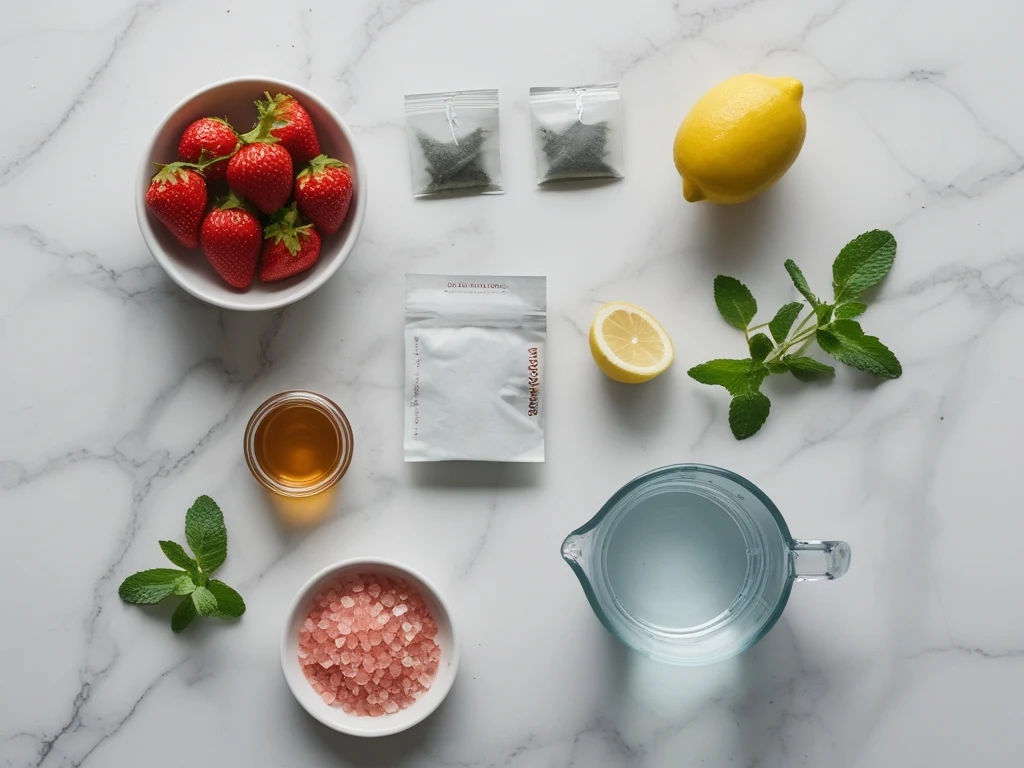
Every ingredient in this strawberry green tea electrolyte drink recipe has a job. None of them are decorative.
- 2 green tea bags — Green tea is the liquid base and the source of catechins (EGCG), which research published in the Journal of Nutrition has linked to reduced oxidative stress and improved recovery after exercise. Green tea also contains a small amount of natural caffeine (25–40mg per cup), which improves alertness without the crash of pre-workout supplements. It is not the same as regular tea — the specific catechin profile matters.
- 1½ cups fresh strawberries — Strawberries are one of the highest potassium-per-calorie fruits available, providing approximately 220mg potassium per cup. Potassium is the primary intracellular electrolyte lost through sweat and the one most commercial sports drinks underdose. They also contribute vitamin C (86mg per 100g), which supports collagen synthesis after exercise stress.
- ¼ tsp pink Himalayan salt — Sodium and chloride are the two electrolytes lost in highest concentration through sweat. One quarter teaspoon of Himalayan salt provides approximately 580mg sodium. Unlike table salt, Himalayan salt also contains trace minerals including magnesium, calcium, and potassium — three of the four electrolytes this recipe targets.
- 2 tbsp fresh lemon juice — Lemon juice adds vitamin C (18mg per tablespoon), potassium, and citric acid, which research in Frontiers in Nutrition suggests may enhance mineral absorption in the gut. It also brightens the flavor profile and prevents the drink from tasting flat.
- 1 tsp raw honey — A small amount of simple carbohydrate accelerates electrolyte absorption. The glucose in honey helps sodium-glucose co-transport in the intestine — the same mechanism commercial sports drinks exploit, but without high fructose corn syrup. One teaspoon adds approximately 21 calories and 5 grams of sugar. Omit it if you’re avoiding sugar.
- 3 cups cold water — The dilution base. Cold water also keeps the drink refreshing and helps your body thermoregulate during or after exercise. Total hydration volume per two-serving batch: approximately 700–750ml after the tea and strawberry juice are added.
How to Make the Strawberry Green Tea Electrolyte Drink (Step by Step)
This strawberry green tea electrolyte drink recipe takes 15 minutes active time (5 to brew, 10 to cool and blend). The most important step is letting the tea cool before adding the strawberries — heat destroys some of the vitamin C in the fruit and changes the flavor from fresh to cooked. I made this mistake my first two batches and wondered why it tasted muddy.
Ingredients (2 servings)
- 2 green tea bags
- 1½ cups (about 200g) fresh strawberries, hulled and sliced
- ¼ tsp pink Himalayan salt
- 2 tbsp fresh lemon juice (about 1 medium lemon)
- 1 tsp raw honey (optional — omit for sugar-free)
- 3 cups cold water, divided
Instructions
- Brew the green tea: Boil 1 cup of water. Remove from heat and steep the 2 tea bags for exactly 3 minutes. Do not steep longer — over-steeping makes green tea bitter and that bitterness carries through the finished drink. Remove bags without squeezing them.
- Cool the tea: Add ½ cup of cold water to the hot tea to bring the temperature down quickly. Let it sit for 5 minutes or set the container in an ice bath for 2 minutes. The tea should be warm, not hot, before you add it to the strawberries.
- Muddle the strawberries: In a large pitcher or bowl, add the sliced strawberries. Use a muddler or the back of a large spoon to press and twist them firmly — you want to extract the juice and pulp, not just bruise the surface. This takes about 60 seconds of consistent pressure. The color will shift from pink to deep ruby.
- Add salt, lemon, and honey: Pour the salt directly over the muddled strawberries and stir. Add the lemon juice and honey (if using) and stir again until the honey is dissolved. The salt will pull more juice out of the strawberries — you’ll see more liquid appear at the bottom of the pitcher.
- Combine with tea and remaining water: Pour the cooled green tea over the strawberry mixture. Add the remaining 1½ cups cold water. Stir for 20 seconds to combine everything.
- Strain and serve: Pour the mixture through a fine mesh strainer into glasses or a clean pitcher. Press the strawberry solids gently to extract all the juice. Discard the pulp (or save it — mixed into yogurt it’s excellent). Serve over ice, or refrigerate in a sealed container for up to 48 hours. Shake or stir before serving — the natural strawberry solids will settle.

The Science: Why These 6 Ingredients Replace Electrolytes
Electrolytes are minerals that carry an electrical charge when dissolved in fluid. The four that matter most for hydration and muscle function are sodium, potassium, magnesium, and chloride. When you sweat, you lose all four — and if you only replace water without replacing electrolytes, you can develop hyponatremia (low sodium), which causes fatigue, cramping, and in severe cases, dangerous drops in blood pressure. This is why plain water is not enough after intense or prolonged exercise.
The strawberry green tea electrolyte drink recipe covers all four: sodium and chloride from the Himalayan salt, potassium from the strawberries and lemon, and trace magnesium from both the salt and the green tea. The NIH Office of Dietary Supplements recommends 2,600–3,400mg of potassium per day for adults, and this recipe delivers approximately 280–320mg per serving from strawberries alone — more than a banana. Sodium intake per serving is approximately 290mg (half of the ¼ tsp salt per batch), which mirrors the sodium concentration in most commercial electrolyte drinks without the added sugar.
The green tea component adds something commercial sports drinks entirely lack: EGCG (epigallocatechin gallate), the primary catechin in green tea. Exercise produces reactive oxygen species — free radicals that contribute to muscle soreness and inflammation. EGCG is one of the most potent dietary antioxidants studied for exercise recovery. Just as I use gelatin-based drinks for their amino acid profile, the green tea base in this recipe is working at the cellular level, not just at the surface level of “it tastes refreshing.”
Sara’s 2-Week Testing Results
I tested this strawberry green tea electrolyte drink recipe daily for 14 days, using it as my post-run recovery drink every morning. My runs were 4–6km in the Texas summer heat, so I was losing a meaningful amount of sweat. I tracked three things: post-run fatigue (rated 1-10 on energy in the hour after returning), muscle soreness the next morning, and whether I had the afternoon energy crash I used to get when drinking Gatorade. For a stress-targeting option, try the cortisol balancing mocktail recipe.
What I found, honestly: the results were better than I expected. By day five, my post-run fatigue score dropped from an average of 6.5 to 4.2. I didn’t crash at 2pm the way I did during the Gatorade week. My calves, which used to be noticeably tight the morning after a longer run, felt looser — which I attribute to consistent potassium and magnesium intake rather than just hydration volume. I was drinking the same total fluid, just with different mineral content.
The thing that surprised me most: flavor doesn’t degrade in the fridge. I make a double batch on Sunday evenings, store it in a glass pitcher, and it’s still bright and fresh on Wednesday morning. The strawberry flavor mellows slightly by day two but the drink doesn’t turn muddy or flat the way I feared. This made the daily habit easy to maintain — no 15-minute morning prep required. Just pour and go.
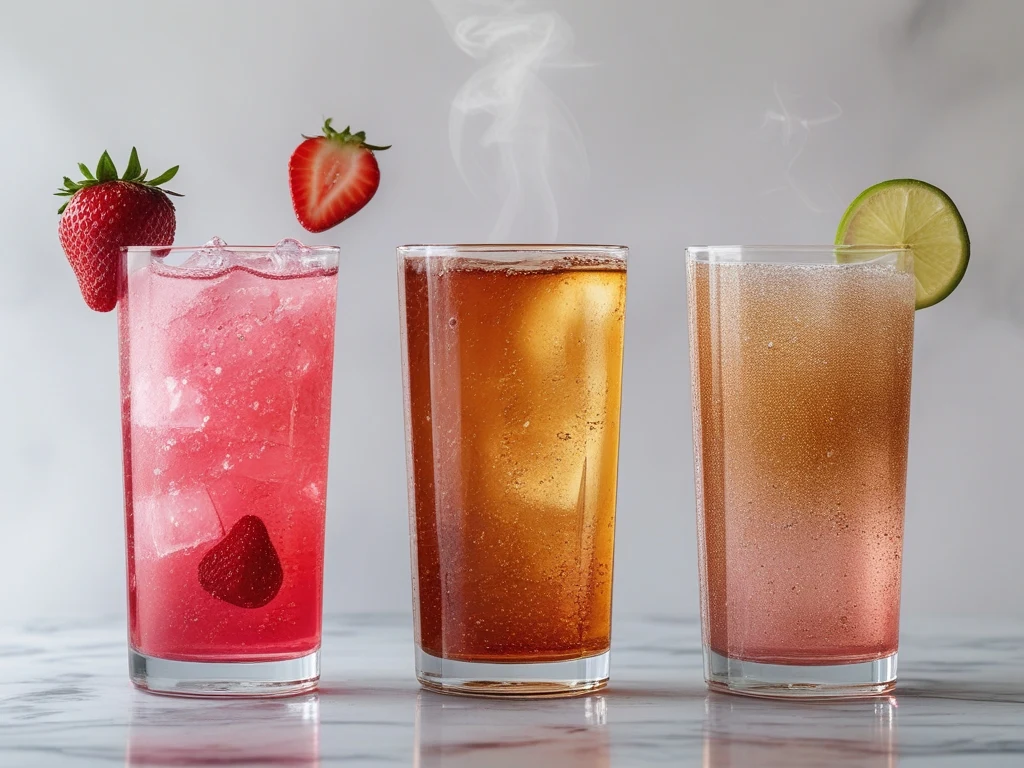
3 Variations of the Strawberry Green Tea Electrolyte Drink Sara Tested
Over the two weeks I tested every version of this strawberry green tea electrolyte drink recipe that made practical sense. Here’s what each variation does differently.
Variation 1 — Iced Concentrate (My Favorite)
Reduce the cold water to 1½ cups total (instead of 3 cups) to make a concentrate. Pour over a full glass of crushed ice. The ice melts and dilutes to approximately the right electrolyte concentration as you drink. This is the coldest, most refreshing version — perfect immediately after an outdoor workout. The concentrate also stays good in the fridge for up to 72 hours, which is longer than the standard recipe because the higher mineral concentration slightly inhibits oxidation.
Variation 2 — Warm Version (Winter / Morning)
Skip the cooling step — keep the brewed tea at drinking temperature (around 60°C / 140°F). Blend the muddled strawberry mixture with the warm tea using an immersion blender for 20 seconds, then strain. This produces a warm, slightly thicker drink that works well as a morning electrolyte tonic in cooler weather or before indoor exercise. The flavor profile shifts: the strawberry tastes slightly cooked (think strawberry jam rather than fresh fruit) and the green tea becomes more prominent. It’s a different drink, but it works well for the purpose. The salt and honey dissolve faster in warm liquid, which is a practical benefit.
Variation 3 — Sparkling Version (Afternoon Snack)
Replace the 1½ cups cold water with 1½ cups unflavored sparkling water, added last. Stir gently — just enough to combine without losing all the carbonation. This version is the least exercise-focused and the most social — it’s the one I’d serve at a gathering. The carbonation makes it feel more like a mocktail than a recovery drink. Add a slice of lime to the glass for a color contrast. One note: carbonation increases the perceived saltiness, so you can reduce the Himalayan salt to ⅛ tsp in the sparkling version without losing the electrolyte function. See more refreshing ideas in my pre-meal recovery drink guide.
When to Drink It and How Often
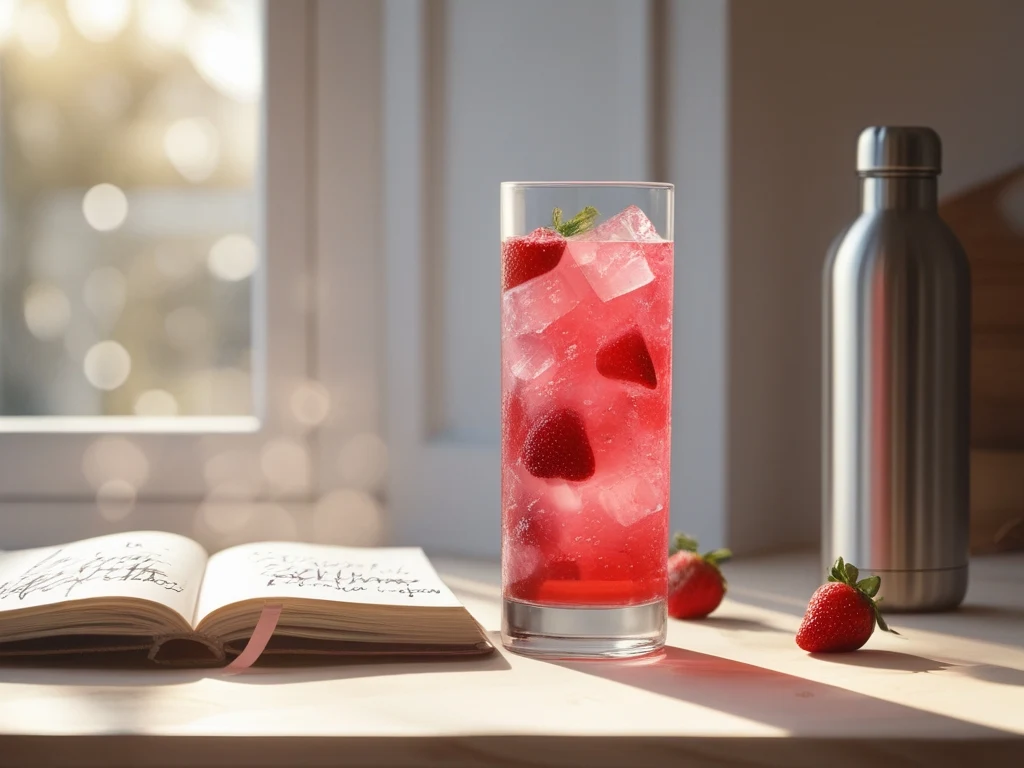
This strawberry green tea electrolyte drink recipe is most effective in three specific windows: immediately after exercise (within 30 minutes), first thing in the morning after an overnight fast (when electrolyte depletion from sleep is at its highest), and during or after any prolonged outdoor activity in heat. It is not a meal replacement and it is not designed for all-day sipping — the salt content, while appropriate for post-workout rehydration, adds up if you drink multiple liters per day.
My personal routine: one serving (half the batch) after my morning run, and a second serving in the early afternoon if I’ve been outside in the heat for more than an hour. On rest days, I skip it and drink plain water — electrolyte drinks are for electrolyte deficit, not for daily supplementation when you’re sedentary. For people managing hunger and hydration together, pairing this drink with a functional pre-meal habit — like the gelatin weight loss recipe before dinner — addresses both goals without overlap.
Batch Prep Tips for the Week
To make this strawberry green tea electrolyte drink recipe a sustainable daily habit, make a 4-serving batch on Sunday and store it in a sealed glass pitcher in the fridge. The recipe scales perfectly: double everything (4 tea bags, 3 cups strawberries, ½ tsp salt, ¼ cup lemon juice, 2 tsp honey, 6 cups water). The drink keeps well for up to 3 days — after that the flavor starts to drift and the vitamin C degrades. If your household goes through it faster, you can scale to 8 servings: use a large stockpot to steep the tea and a standard kitchen blender instead of a muddler.
One thing I learned: don’t freeze it. The strawberry solids turn mushy when thawed and the texture becomes unpleasant even after straining. Refrigeration only. If you want a longer-shelf version, make the strawberry syrup separately (muddle + salt + lemon, no water), store that in a small jar, and brew fresh green tea when you want a glass. The syrup lasts 5–6 days in the fridge.
Does strawberry green tea have electrolytes?
Yes. The strawberry green tea electrolyte drink recipe provides all four primary electrolytes: sodium and chloride from the pink Himalayan salt, potassium from the fresh strawberries and lemon juice, and trace magnesium from the Himalayan salt and green tea. Per serving, this recipe delivers approximately 290mg sodium and 290–320mg potassium, which is comparable to most commercial electrolyte drinks without the artificial ingredients or high sugar content.
What electrolytes does green tea provide?
On its own, green tea contributes small amounts of potassium, magnesium, and fluoride — enough to matter as a base, but not enough to replace electrolyte losses from exercise by itself. That is why the strawberry green tea electrolyte drink recipe combines green tea with pink Himalayan salt (for sodium and chloride) and fresh strawberries and lemon (for significant potassium). The green tea’s primary benefit in this recipe is its EGCG antioxidant content, which supports post-exercise recovery.
Is it good to add salt to green tea?
Yes, adding a small amount of pink Himalayan salt to green tea is not only safe but functionally beneficial for rehydration. Salt in a beverage helps the body retain the fluids it absorbs and triggers thirst mechanisms that prevent under-hydration. The amount used in the strawberry green tea electrolyte drink recipe — one quarter teaspoon per two-serving batch — provides approximately 290mg sodium per serving, which is within the recommended range for an electrolyte drink. The salt is not detectable as a distinct flavor when combined with strawberry and lemon.
How much potassium is in strawberries?
Fresh strawberries contain approximately 153mg of potassium per 100g serving, or about 220mg per cup. The 1.5 cups used in the strawberry green tea electrolyte drink recipe (for 2 servings) provide around 330mg total potassium across the batch — approximately 165mg per serving. Combined with the potassium from fresh lemon juice (49mg per 2 tablespoons), each serving delivers roughly 210mg potassium. The NIH recommends 2,600–3,400mg potassium per day for adults, so this drink meaningfully contributes to that target without displacing other dietary sources.
Can I make the strawberry green tea electrolyte drink ahead of time?
Yes. Make a double batch and store it in a sealed glass pitcher in the refrigerator for up to 3 days. After 3 days the vitamin C from the strawberries and lemon begins to degrade noticeably and the flavor starts to flatten. Shake or stir before each serving since the natural strawberry solids settle at the bottom. Do not freeze — the texture becomes unpleasant after thawing. For longer shelf life, store the muddled strawberry syrup (without the water and tea) separately for up to 5–6 days and brew fresh green tea when needed.
Can children drink the strawberry green tea electrolyte drink recipe?
Children under 12 should not drink this recipe as written because green tea contains caffeine (25–40mg per cup brewed). For children, substitute the green tea with caffeine-free herbal tea such as hibiscus or rooibos — both maintain the electrolyte function of the recipe while being caffeine-free. Reduce the Himalayan salt to 1/8 teaspoon for children under 10, as their sodium needs are lower. The strawberry, lemon, and honey components are appropriate for children over 12 months.
How does the strawberry green tea electrolyte drink compare to Gatorade?
The strawberry green tea electrolyte drink recipe provides comparable sodium (290mg vs 270mg per serving in Gatorade Thirst Quencher) and better potassium (210mg vs 75mg). It contains 8–10g of natural sugar versus 21g refined sugar per Gatorade serving. It has zero artificial dyes, no high fructose corn syrup, and adds EGCG antioxidants from the green tea that no commercial sports drink provides. It costs approximately $0.75 per serving (less if you buy strawberries in season) versus $1.50–2.50 for a bottled sports drink. The main trade-off is preparation time: 15 minutes versus opening a bottle.
What can I use instead of pink Himalayan salt in the electrolyte drink?
Regular sea salt or kosher salt work as direct substitutes at the same quantity. Avoid iodized table salt if possible — the additives can create a slight chemical taste. If you want to increase the potassium-to-sodium ratio (useful for people monitoring blood pressure), try using a potassium-sodium salt blend such as Nu-Salt or Morton Salt Substitute at 1/8 teaspoon — it provides potassium chloride instead of sodium chloride. Do not omit the salt entirely: without it, the strawberry green tea electrolyte drink recipe does not deliver sufficient sodium for true electrolyte replacement and becomes closer to a flavored water.
Make This Strawberry Green Tea Electrolyte Drink Recipe Your Daily Recovery Drink
Two weeks of testing convinced me this strawberry green tea electrolyte drink recipe is worth making permanent. It costs less than a dollar a serving, takes 15 minutes once a week to batch-prepare, replaces a product I was spending $40 a month on, and measurably improved my post-workout energy levels. The flavor is genuinely good — not medicine-good, not “at least it’s healthy”-good. My kids ask for the sparkling version as a treat.
If you’re building a whole-food hydration and recovery routine, pair this drink with functional foods that work during the rest of the day. For hunger management before meals, I use the gelatin trick recipe every evening — same philosophy, different mechanism. For a broader protocol combining hydration, protein, and appetite management, see the gelatin diet recipe guide I tested for 30 days. The common thread: simple, whole ingredients, used consistently, actually produce results. This strawberry green tea electrolyte drink is the hydration piece of that puzzle.